
Casinos Without ID Checks — How UK Players Get There and What They Give Up
 Available in GB
The phrase “no ID verification casino UK” promises something the British market cannot legally deliver, and that gap is the whole story. A UK Gambling Commission licensee must confirm a customer’s name, address and date of birth before any deposit or wager — a mandate that has stood since 7 May 2019, when the Commission abolished the previous 72-hour grace period in which a player could deposit, play and send documents later. That obligation is not a technicality; it is the structural fact every “no-ID” claim in the UK market either works around or ignores.

The honest answer to whether a no-ID casino exists in the UK is two answers stacked on top of each other. The first: inside the licensed system, no. The second: outside it, yes — and the trade-offs are sharper than the marketing suggests. This page walks through both, the verification models each side uses, the bonuses on offer, and what a UK player actually keeps, and loses, when they pick one over the other.
As of 16 August 2026, every licence and KYC claim below has been checked against the UK Gambling Commission’s public register and the named operator pages.
What “No ID Verification” Actually Means at UK Online Casinos
“No ID verification” is a phrase that lives mostly in affiliate copy. In the UK, the idea of a fully no-verification casino is closer to marketing shorthand than reality, because the Gambling Commission requires operators to verify core details — name, address and date of birth — before a customer can deposit or gamble. The phrase that more accurately describes what some licensed casinos do is “frictionless verification”: the player passes a check without ever being asked to upload a passport, because the check happens in the background.
That distinction is the heart of the topic. A player who searches for a no-ID casino is usually after one of three things: speed (deposit and play in under a minute), privacy (no personal documents held by a gambling company), or simply the absence of the upload step that every UK-licensed casino has made mandatory since 2019. Each is a real motivation, and none of them is, on its own, a reason to leave the licensed system. The question is what the licensed system actually does when a casino claims to verify “without documents” — and the answer is more interesting than the marketing.
The Standard UK Casino Registration Journey — What Players Normally Go Through
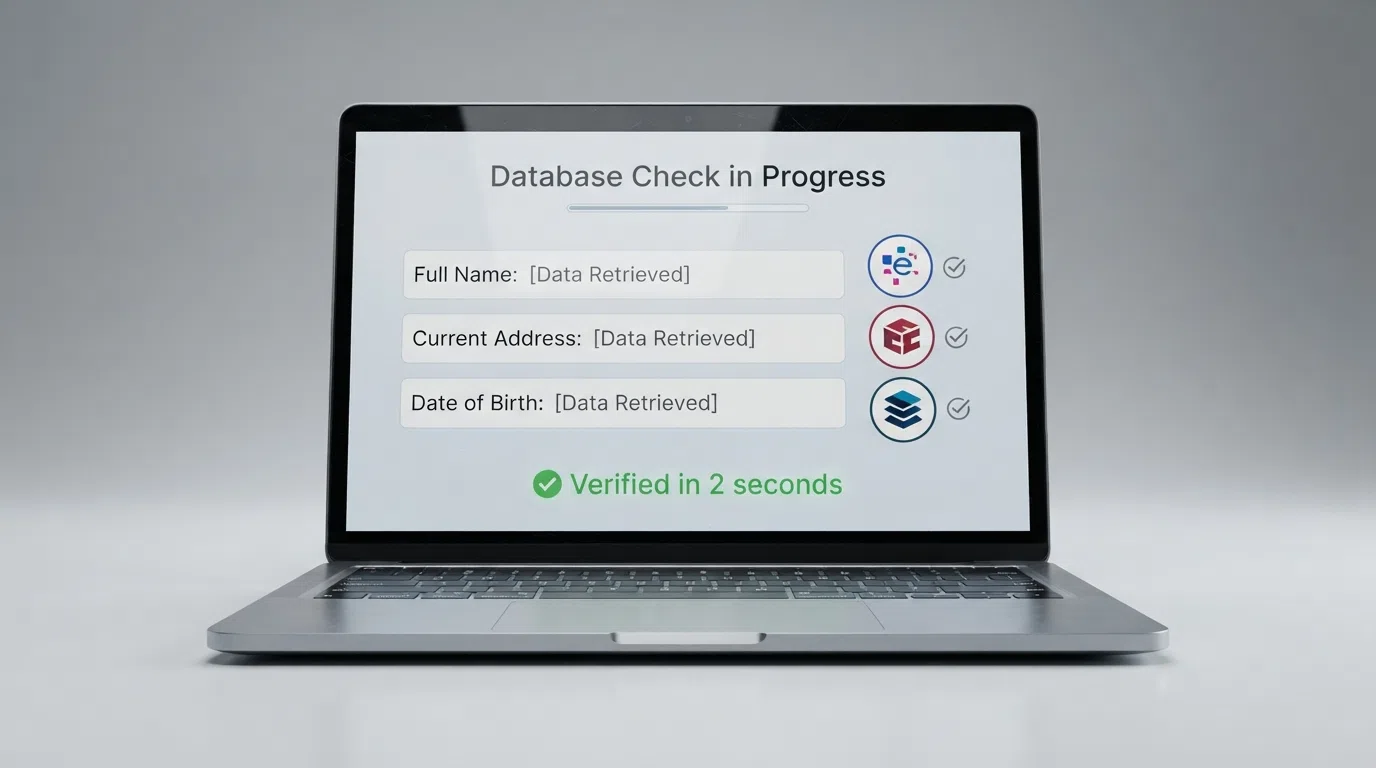
At every UKGC-licensed casino, the onboarding sequence is the same regardless of brand. A new customer fills in name, address and date of birth on a single form. Before the first deposit clears, those three fields are checked against credit reference agency databases — Experian, Equifax and TransUnion — and the electoral roll. For the great majority of UK adults whose details are on file with at least one of those sources, the check returns a match in seconds and the deposit button activates.
For a minority — recent movers, people with thin credit histories, anyone whose details do not line up cleanly across the three sources — the casino escalates. The first escalation is a request for a document: a passport or driving licence for the name and date of birth, a recent utility bill or bank statement for the address. The Commission has been explicit that initial-only entries, nicknames or commercial addresses in place of residential ones are not sufficient to meet the standard, and operators who accepted those shortcuts have been pulled up on it.
The point of the escalation is not to frustrate the player; it is the Commission’s “verify before deposit” mandate at work. The customer cannot fund an account until the operator is satisfied on the three core fields. That is the rule, and every UK-licensed casino — Sky Vegas, bet365, William Hill, Ladbrokes, Paddy Power, the rest — runs the same sequence.
Why UK Players Search for Casinos Without ID Checks
The motivations are not mysterious. Photographing a passport or driving licence, uploading it through a browser or app, and waiting for a manual review is friction. For a player who has done it half a dozen times across different sites, the friction is cumulative. Some players also lack the standard documents: a recent utility bill with a current address is not always available, and a driving licence is not everyone has. There is also a privacy concern that is reasonable even if it is not the regulator’s primary concern: every additional document a casino holds is another piece of personal data exposed in a breach.
Underneath all of that is the appeal of immediacy. The promise “deposit and play in 60 seconds” is the single most common sales pitch at offshore no-KYC casinos, and the reason it works is that the UK journey — even at a frictionless, database-only casino — is closer to two or three minutes, not sixty seconds, and is occasionally interrupted by a request for a document the player does not have ready.
The Trade-Off That Defines This Whole Topic — Convenience vs Protection
The convenience is real. The cost is also real, and it is not all upfront. A UK-licensed player is automatically inside a system that provides a national self-exclusion register (GAMSTOP, mandatory for every online licensee since 31 March 2020), access to approved alternative dispute resolution, a UKGC complaints route, and consumer protection under British law if funds are withheld. Step outside the licensed system and every one of those protections stops at the border. The offshore casino can still run a fair operation, but the player has no British regulator to complain to, no ADR provider, and no realistic route to recover funds if the operator declines to pay.
That is the trade-off. The remaining question is what each side of the trade looks like in practice.
Why UK-Licensed Casinos Must Verify Your Identity — and Where No-ID Play Exists
The UK regime is built on the principle that no anonymous play is allowed inside the licensed system, and the offshore reality is built on the principle that nothing stops a player from registering at a Curaçao or Costa Rica-registered casino with nothing more than an email address. Both models exist, both serve UK players, and they are governed by entirely different rulebooks.
The May 2019 Rule Change That Ended Anonymous UK Casino Play
Before 7 May 2019, a UKGC-licensed online casino could allow a customer to deposit and gamble for up to 72 hours before sending in identity documents. That grace period was the closest thing the British market ever had to “no ID at registration,” and it is the reason some older comparison pieces talk about “delayed verification.” The grace period is gone. The Commission’s 2019 reform required operators to verify name, address and date of birth before any deposit or wager, in any product, on the operator’s own site — free-to-play games included. LCCP Condition 17.1.1 sets the substantive standard, and the customer-facing version is simple: you cannot put money in until the casino is satisfied on those three fields.
The reform was the moment anonymous UK play ended, in practice, for any player who wanted to stay inside the licensed system. Eight years on, it remains the structural reason every UK-licensed casino’s first action is a check, not a deposit.
Soft KYC — How UK Casinos Verify You Without a Single Uploaded Document
The “soft” in soft KYC refers to the data source, not the rigour. A fully compliant UK verification is performed by querying three credit reference agencies (Experian, Equifax and TransUnion) and the electoral roll, and matching the player’s name, address and date of birth against the records they hold. Where a confident match exists, the casino accepts the result and the player is verified. The whole thing takes seconds; the player does not upload anything, photograph anything, or wait for a human review.
The casino never sees the underlying credit file. It receives only a yes/no and a confidence score, which is why the check feels invisible. From the player’s perspective, the deposit button simply activates, sometimes faster than a password reset. From the regulator’s perspective, the player’s identity has been confirmed against the same data sources a mortgage lender would consult. The Commission treats this as fully compliant, and several major UK operators run their entire onboarding this way as a matter of course.
It is still verification. The player’s identity has been checked. The fact that the check happened in the background is a UX choice, not a regulatory shortcut.
Stake Caps, Deposit Limits, and Bonus Rules — What the UK Market Actually Caps
The UK model is built around caps, not around player-set boundaries alone. Online slots carry a statutory maximum stake of £5 per game cycle for players aged 25 and over (in force since 9 April 2025) and £2 for players aged 18 to 24 (in force since 21 May 2025). The cap applies per spin, not per session, and there is no operator opt-out. The age band matters: a 19-year-old player at the same slot cannot stake more than £2 a spin, full stop.
On bonuses, the regulator is now hard-edged. From 19 December 2025, wagering requirements on bonus funds are capped at 10×, and mixed-product promotional offers — the “bet £10 on football, get 50 free spins” pattern — are banned. The 10× cap is a ceiling, not a floor, so offers like Sky Vegas’s no-wagering free spins and bet365’s no-wagering free-spin reveals sit below it. On deposits, the model is that limits are customer-set, but from 31 October 2025 operators must prompt every new customer to set a financial limit before their first deposit, and must action any decrease request immediately. Credit cards have been banned for all remote gambling since 14 April 2020, including credit-card-funded e-wallet payments.
The shape of all of this is that a UK player is automatically inside a system that limits how much they can stake per spin, how much they can be required to turnover a bonus, and how they can pay — regardless of which licensed casino they choose.
How Offshore No-KYC Casinos Operate — Crypto, Email Signups, and No Documents
Outside the UK system, the model is built around frictionless onboarding in a different sense. The largest no-KYC crypto casinos serving UK players are Curaçao-licensed — Mega Dice, Jackbit, Flush among them — and a small number operate on a Costa Rica corporate registration that is not, despite the marketing, a gambling licence at all (BetPanda, Cryptorino). The onboarding is exactly what the keyword suggests: an email address, a username, a password, and the deposit button is live. No name. No address. No date of birth.
Crypto is the payment rail that makes the model work. A Bitcoin or Ethereum deposit does not pass through a bank, so the casino never sees a sort code or account number. The wallet address is, in effect, the identity layer, and on most of these platforms withdrawals are paid back to the same wallet. Game libraries are large — Mega Dice advertises 6,000+ titles, Jackbit over 8,500 — and the provider list is the same one UK players would recognise (Pragmatic Play, Evolution, Hacksaw, Nolimit City, Play’n GO), because the providers license the games to both markets.
The Curaçao LOK framework, introduced in 2024, gives the Curaçao Gaming Authority a more substantive role than the old master licence structure allowed, with some ADR machinery. Costa Rica is different again: a company registered there has a corporate identity, but the gambling product itself is unregulated, and there is no player-recourse obligation attached to it.
When Offshore No-KYC Casinos Ask for ID — Withdrawal Triggers and Thresholds
“No-KYC” is a marketing label, and the limit is set by anti-money-laundering law, not by the casino. Every operator in the set has a threshold above which it has to verify — usually on the first withdrawal, sometimes on a cumulative basis. The mechanics vary:
- Mega Dice runs KYC on first withdrawal when triggered.
- Jackbit uses a risk-based model with Sumsub AI: verification activates at $5,000 cumulative withdrawals.
- Flush is classified as soft-KYC, with test withdrawals clearing in under eight minutes; verification appears at higher thresholds.
- BetPanda and Cryptorino describe KYC as conditional, most commonly at withdrawal on larger amounts, with the precise threshold unpublished.
The industry gloss is that no operator is truly no-KYC at every threshold. Anti-money-laundering obligations apply everywhere, and what “no-KYC” really means in practice is no verification up to a higher threshold — typically in the £4,000 to £8,000 cumulative crypto activity range. A player who never crosses that line, never wins a single large amount, and never trips an internal flag will never see a document request. A player who does, will.
What You Lose When You Leave the Licensed System — No UKGC, No GamStop, No Redress
The clearest way to think about the cost of going offshore is to list what does not come with the journey. A player at an unlicensed casino has no UKGC complaints route — the Commission does not accept complaints about operators it does not license, and it does not license offshore brands. There is no approved ADR provider in the picture. There is no British consumer law route to recover withheld funds; an offshore operator’s terms of service typically specify the law of its own jurisdiction, and pursuing a complaint means using that jurisdiction’s machinery. GAMSTOP self-exclusion is mandatory for UKGC licensees only; the offshore casino has no obligation to check the register, and most do not.
The Commission’s enforcement model against unlicensed operators is disruption, not reimbursement. Between April 2024 and June 2025 it issued 3,140 disruption notices and referred 447,778 URLs to search engines for delisting. That work is real, and the Commission has been explicit that the goal is to make the unlicensed market harder to find and harder to use — not to refund the players who have already lost money to it. A player who has a complaint about a Curaçao or Costa Rica operator is not the audience the disruption model is built to serve.
No-Deposit Bonuses and Free Spins Without ID Verification
Offshore no-KYC casinos do offer no-deposit-style promotions — Jackbit’s 100 wager-free spins on a $50 first deposit with a $100 max win cap and 24-hour activation window is the clearest example in the current set. Compared with UK-licensed offers, the offshore promotional structure is mixed. Some of the largest headline numbers (CryptoWild-style 200% deposit matches up to 1 BTC at Mega Dice) come with high wagering, and BetPanda’s 80× wagering multiplier is roughly double the typical crypto-casino range of 35× to 50×. The UK side, by contrast, is bounded by the 10× cap in force from 19 December 2025, and the no-wagering free-spin offers at Sky Vegas and bet365 sit at the consumer-friendly end of the spectrum.
The honesty test is the small print. Offshore free-spin offers tend to carry max-win caps, short validity windows, and high wagering; UK no-wagering free spins tend to be paid as cash, expire after 7 days, and carry no turnover requirement. The latter is verifiable, regulated, and not capped by max-win; the former is faster to claim and pays out in crypto, but turns into a real-money value only after the small print is satisfied.
Pay by Mobile and No-ID — Depositing Without a Document Trail
Pay-by-mobile is the deposit method that needs no bank account and no card — a player confirms a deposit via SMS and the cost is added to their phone bill or taken from their pay-as-you-go balance. The friction is genuinely low, and for that reason it has a natural fit with the preferences of players who prioritize convenience.
The catch is that the phone number itself becomes an identity anchor. Most UK-licensed pay-by-mobile casinos treat the mobile number as part of the soft-KYC record, and the deposit limits baked into the mobile-billing services (typically £30 a day for bill-pay, £10 a day for pay-as-you-go on the smaller providers) make the channel suitable for small deposits rather than for sustained play. Credit-card-funded e-wallets have been caught by the 14 April 2020 credit-card ban, so the routing that did once let players use a card indirectly through a wallet is closed. Mobile, by contrast, is still open and still low-friction — and still a channel where the operator has a verified contact point, which is not quite the same thing as no verification at all.
10 Casinos UK Players Turn to for Low-KYC and No-ID Play — Ranked and Compared
The ranking below splits deliberately. The top five are UKGC-licensed casinos whose onboarding is as close to “no ID” as the licensed system allows — soft database checks, no document upload in the standard flow, full UK consumer protection. The bottom five are offshore no-KYC operators that allow email-only signup, accept UK players, and offer a real-money product without identity verification up to published thresholds. The split is stated plainly because the choice is structural, not cosmetic.
The columns are: licence type, the default verification a player encounters, the point at which verification is escalated, whether GAMSTOP self-exclusion applies, the headline welcome offer, and the wagering multiple on that offer. The two halves of the table are not comparable row-for-row on bonuses — UK bonus terms are bounded by the 10× cap and tend to be lower by design, while offshore offers vary widely.
| Operator | Licence | Default Verification | KYC Trigger | GamStop | Welcome Bonus | Wagering |
|---|---|---|---|---|---|---|
| Sky Vegas | UKGC (Flutter Entertainment) | Soft database check (CRA + electoral roll) | Source-of-funds at spend thresholds | Yes | 200 free spins, winnings as cash | 0× |
| bet365 | UKGC (bet365 Group) | Soft database check | Source-of-funds at higher spend | Yes | Up to 500 free spins via 10 reveals | 0× |
| William Hill | UKGC (WHG International, account 39225) | Soft database check | Source-of-funds and enhanced due diligence | Yes | 200 free spins on Big Bass Splash at 10p | 10× |
| Ladbrokes | UKGC (Entain Group) | Soft database check | Source-of-funds at spend thresholds | Yes | — | — |
| Paddy Power | UKGC (Flutter Entertainment) | Soft database check | Source-of-funds at spend thresholds | Yes | — | — |
| Mega Dice | Curaçao (MIBS N.V.) | Email-only signup | First withdrawal | No | 200% up to 1 BTC + 50 free spins | — |
| Jackbit | Licence not confirmed (risk-based KYC) | Username, email, password only | Sumsub AI at $5,000 cumulative withdrawals | No | 100 wager-free spins, $100 max win cap | 1× |
| Flush | Curaçao | Email-only, soft KYC | Withdrawal thresholds | No | — | — |
| BetPanda | Costa Rica registration (not a gambling licence) | Email-only for deposits | Larger withdrawals, AML flags | No | 100% up to 1 BTC | 80× |
| Cryptorino | Costa Rica registration (Star Bright Media S.R.L.) | Email-only signup | Conditional on withdrawal amount | No | 100% up to 1 BTC | 66× |
The expected cost of the William Hill welcome offer, taken on its own terms, is the kind of figure a player should be able to estimate before accepting it. Assuming only the bonus amount is wagered, the £20 of free-spin value (200 spins at 10p) carries a 10× turnover requirement, so £200 must be staked through the wagering. At Starburst’s 96.10% RTP, the expected loss across that turnover is £200 × (1 − 0.9610) = £7.80. That is the bonus’s real cost, expressed in expected terms — an average over many spins, not a guarantee for any individual play. The free spins themselves are paid in cash at the end of any qualifying stake, so the £20 is real money; the £7.80 is what the wagering costs on average to clear.
Sky Vegas — UKGC-Licensed, No-Wagering Free Spins, Soft Database KYC
Sky Vegas is the cleanest example of the frictionless-verification model in the UK. A new customer enters name, address and date of birth, the casino runs the check against credit reference agencies and the electoral roll, the deposit button activates, and the player is in. The welcome offer is 200 free spins on the first eligible game, with winnings paid as cash — no wagering, no max-win cap on the spin winnings beyond the spin value, no bonus-to-cash conversion step. The £10 deposit and stake requirement must be met within 30 days; the free spins themselves expire after 7 days. Game providers cover NetEnt, Play’n GO, Pragmatic Play, IGT, Blueprint and Evolution, which is a mainstream UK line-up.
This is the best of both worlds inside the licensed system: verification happens, but the player does not see it; bonus winnings are cash; GAMSTOP applies; the licence is verifiable on the Gambling Commission’s public register under Flutter Entertainment. The trade-off is that there is no getting around the registration step — a player who refuses to enter a name and address cannot use the casino at all.
bet365 — UKGC-Licensed, Up to 500 Free Spins via Reveals, Soft-KYC Onboarding
bet365’s casino welcome runs as a “Free Spins Reveals” mechanic: up to 500 free spins across 10 reveals, each reveal awarding 5, 10, 20 or 50 spins on Book of Horus, Curse of the Bayou, Magic Forge or Wrath of the Deep, with the first 5 reveals credited on day one and the rest over 20 days. Free-spin winnings carry no wagering, are paid in cash, and the £10 lifetime deposit requirement is the only deposit-side condition (Paysafecard excluded). The 30-day window from registration is the qualifying period.
Verification follows the same soft database model as every other UKGC licensee in the set: name, address and date of birth checked before any deposit. The provider line-up is the largest in the licensed group reviewed here — Playtech, NetEnt, Microgaming, IGT, Pragmatic Play and Evolution — and the breadth shows in the slot and live-casino range. bet365 stands out as the most generous licensed entry in the table for players who prioritize scale and zero-wagering terms.
William Hill — UKGC-Licensed, 200 Free Spins at 10× Wagering, Soft-KYC Onboarding
William Hill is the UK bookmaker whose casino welcome sits at exactly the maximum wagering multiple the regulator allows. The 200 free spins on Big Bass Splash are credited at 10p per spin, winnings carry 10× wagering (the December 2025 cap), the bonus has a 7-day validity, and the spins themselves expire 72 hours from credit. The £10 deposit plus £10 stake must be placed to qualify, and the licence sits with WHG International under account 39225 on the public register.
The wagering is the headline number. At 10× on the £20 of spin value, the expected cost in the Starburst-equivalent calculation earlier (£200 of turnover, £7.80 of expected loss) is the bonus’s real price in expected terms. Calculating the cost of clearing the wagering is a standard step before claiming; Sky Vegas and bet365 offer lower-wagering or cash-based alternatives for comparison.
Ladbrokes — UKGC-Licensed Entain Brand, Soft-KYC Onboarding, Bonus Terms Unconfirmed This Review
Ladbrokes sits in the same Entain stable as Coral and runs the same UKGC-licensed onboarding. Verification is the standard soft database check before first deposit, and the full UK consumer protection regime applies — GAMSTOP, ADR, UKGC complaints, source-of-funds at higher spend. The provider line-up is Playtech, NetEnt, IGT, Evolution and Pragmatic Play.
The welcome offer changes regularly and is best verified on the operator’s own promotions page. Ladbrokes’ casino bonus terms change regularly, and the most reliable current offer sits on the operator’s own promotions page rather than in any third-party summary. The platform is the right pick for a player who values the brand and the licensing structure, and the wrong pick for someone who needs a precise bonus headline before signing up.
Paddy Power — UKGC-Licensed Flutter Brand, Soft-KYC Onboarding, Bonus Terms Unconfirmed This Review
Paddy Power runs on the same Flutter Entertainment licence as Sky Vegas, and the verification flow is identical: name, address and date of birth, soft database check, deposit button live in seconds. Game providers cover Playtech, NetEnt, IGT, Evolution and Red Tiger.
The welcome offer changes regularly and is best verified on the operator’s own promotions page. Like Ladbrokes, the bonus changes too often to pin down in a static comparison, and the operator’s own site is the live source. For a player who wants the Flutter infrastructure and is happy to check the current offer directly, Paddy Power is functionally interchangeable with Sky Vegas on the KYC side.
Mega Dice — Curaçao-Licensed Crypto Casino, Email-Only Signup, KYC at First Withdrawal
Mega Dice is the clearest case in the offshore set. The casino is operated by MIBS N.V. under a Curaçao licence, is accessible from the UK, and the registration form asks for an email address and a password. There is no name, no address, no date of birth. The welcome offer is a 200% deposit match up to 1 BTC plus 50 free spins, and the game library runs to 6,000+ titles across Pragmatic Play, Evolution, Hacksaw Gaming, Nolimit City and Push Gaming.
The first friction point is the first withdrawal. At that point, KYC may be triggered, and the player will need to provide what every Curaçao casino asks for at that stage. The practical implication is that Mega Dice is a strong fit for crypto-native players who deposit and withdraw in similar amounts and are comfortable with the verification appearing on the way out. It is not a fit for a player who wants verification to stay invisible across the whole journey.
Jackbit — Risk-Based KYC, Wager-Free Spins, $5,000 Withdrawal Threshold
Jackbit (rebranded to Jack.com) is the operator that states its KYC trigger explicitly. The default onboarding is username, email and password only, with no documents required for standard play. The 100 wager-free spins on Hot Chilli Bells carry a $100 max win cap and a 24-hour activation and usage window, which is short by UK standards but standard for the offshore category. Sumsub AI verification activates at $5,000 in cumulative withdrawals — a published number, not a “we’ll let you know” threshold.
The game library is the largest in the reviewed set: 8,500+ titles across 70+ providers. For a player who plans withdrawals well below the $5,000 line and wants the cleanest possible onboarding, Jackbit is the most transparent offshore entry on KYC. For a player whose withdrawals are likely to cross that line, the verification is coming — and the model is honest about that.
Flush — Curaçao-Licensed, Soft-KYC Classification, Sub-8-Minute Withdrawals
Flush is classified as soft-KYC: email-only onboarding with no documents required for standard play, and verification appearing at withdrawal thresholds. Test withdrawals have cleared in under eight minutes, which is fast by any standard and reflects the operational side of a Curaçao-licensed crypto casino with a working payments team. Providers cover Pragmatic Play, Evolution, Hacksaw and Nolimit City for slots and live casino.
The welcome offer changes regularly and is best verified on the operator’s own promotions page. Flush is a sensible pick for a player who values payout speed above headline bonus size and accepts the standard Curaçao verification-on-withdrawal pattern.
BetPanda — Costa Rica Registration, 80× Wagering, Email-Only Entry
BetPanda is the operator in the set that requires the most careful reading of the licence line. The company is registered in Costa Rica, but a Costa Rica registration is a corporate identity, not a gambling licence — it does not regulate the gambling product, audit fairness, or provide player recourse. The distinction matters: there is no regulator behind the operator, only a company structure. The welcome offer is a 100% deposit match up to 1 BTC, with 80× wagering on the bonus — roughly double the typical crypto-casino range of 35× to 50×, and a number that should give any player pause.
Onboarding is email-only for deposits; KYC is commonly triggered at withdrawal on larger amounts. The game library is 3,000+ titles from Pragmatic Play, Evolution and Hacksaw, and the wagering window is 7 days. The honest summary is that BetPanda is a low-friction crypto casino for a player who understands what a Costa Rica registration does and does not cover, and is comfortable with an 80× bonus turnover that no UK-licensed casino could offer.
Cryptorino — Costa Rica Registration, 66× Wagering, Bitcoin Lightning Payouts
Cryptorino shares an operator group with BetPanda and runs the same Costa Rica corporate registration under Star Bright Media S.R.L. The 100% up to 1 BTC welcome bonus carries 66× wagering — still high by any comparison, but lower than the 80× at BetPanda. Onboarding is email-only with KYC conditional on withdrawal amount, and the platform offers 6,000+ games across 70+ providers plus a sportsbook.
The differentiator is the payout rail. Bitcoin Lightning Network withdrawals are quoted at approximately 90 seconds for non-triggered withdrawals, which is the fastest cashout in the set. For a player whose stake is small and whose withdrawals stay below the verification line, the speed is real; for a player who wins enough to trip the threshold, the verification appears on the way out and the speed advantage does not apply.
No-ID Slots — Free Play, Real Money, and No-Deposit Options Without Documents
Slot play is the part of the topic where the marketing gets loudest. The reality is more contained: there are three ways to play slots without identity verification — demo play (no signup at all, no real money), real-money play at an offshore no-KYC casino (email signup, KYC at threshold), and free-spin offers at a UK-licensed casino (full KYC at signup, but the spins themselves carry no wagering). Each has its place, and the same slot title can appear in all three.
| Slot Title | RTP | Provider | Volatility |
|---|---|---|---|
| Starburst | 96.10% | NetEnt | Low |
| Book of Dead | 96.21% (default) / 94.25% (most UK deployments in 2026) | Play’n GO | High |
| Big Bass Bonanza | 96.71% | Pragmatic Play | High |
The Book of Dead number is the one to watch. Play’n GO offers the title in five RTP configurations, and most UK-licensed casinos in 2026 deploy it at 94.25% rather than the default 96.21%. The difference shows up only over thousands of spins, but it is real, and the version in the table is the UK-deployed figure. Starburst’s 96.10% is published and stable; Big Bass Bonanza’s 96.71% is the highest configuration Pragmatic Play offers.
How No-ID Slot Sites Deliver Games Without Asking Who You Are
The mechanism is a separation of concerns. The slot provider — NetEnt, Play’n GO, Pragmatic Play, the rest — licenses the game to a casino operator; the player loads the game in a browser; the casino platform handles payments, balance, and the player account. At an offshore no-KYC casino, the player account is the email-and-password record; the casino does not run identity checks at this layer. The slot itself does not know or care who is playing it; it just spins, and the casino credits the result to the player balance.
That separation is what allows a casino to host 6,000 or 8,500 games without asking a single identity question at registration. The integration is commercial, not regulatory, and the games are the same titles a UK player would find at a Sky Vegas or bet365. The difference is the wrapper around the games — the verification layer above them.
Real-Money No-ID Slots — What You Can Actually Play
At Mega Dice, the headline count is 6,000+ titles across Pragmatic Play, Evolution, Hacksaw, Nolimit City and Push Gaming. At Jackbit, 8,500+ across 70+ providers. At BetPanda, 3,000+ across Pragmatic Play, Evolution and Hacksaw. The titles a UK player recognises — Starburst, Book of Dead, Big Bass Bonanza, the Pragmatic Play “1000” series, the Nolimit City high-volatility catalogue — are all in those libraries, because the providers license the same games to both UK and offshore operators.
The configuration point is what changes between markets. Book of Dead, as noted, is usually deployed at a lower RTP in the UK than the developer’s default. The reverse can also happen: some providers offer lower-RTP configurations in offshore markets, and the published RTP is the one the casino chooses, not the one the developer prefers. The slot table above uses the figures that are published and verifiable.
Free-Play and Demo No-ID Slots — No Registration, No Deposit
Demo play is the genuinely registration-free way to spin slots. No signup, no email, no deposit — a player opens a slot page on a provider or aggregator site, the game loads with a play-money balance, and the player spins until the balance runs out. There is no real-money payout, because there is no real-money balance, but there is also no identity check at any point. The play-money balance refreshes if the player closes and reopens the game.
The constraint is that demo play cannot pay real winnings. It is useful for learning a game’s volatility, for trying a new release, and for entertainment without a stake. It is not a substitute for real-money play, and it is not a route to a withdrawal.
No-Deposit Free Spins on No-ID Slots — The Real Terms Behind the Offer
The clearest example in the current offshore set is Jackbit’s 100 wager-free spins on Hot Chilli Bells with a $100 max win cap and a 24-hour activation and usage window. The mechanics: deposit $50, activate the spins, use them within 24 hours, anything you win up to $100 is paid as cash. The cap is the binding constraint, not the wagering, because the spins are wager-free.
The UK-licensed comparison is the Sky Vegas 200 free spins (no wagering, winnings as cash, 7-day expiry) and the bet365 up to 500 free spins via reveals (no wagering, winnings as cash, 30-day window). Both require full KYC at signup, both are bounded by the UK bonus rules, and neither carries a max-win cap on the spin winnings. A player who is choosing between the offshore and licensed side on the bonus alone has more total spin value at the licensed casinos, with full consumer protection, and the cost is the document upload the offshore route skips.
Staying Safe — Responsible Gambling When the Safety Net Is on the Other Side of the Border
The safety net is the part most “no-ID” marketing is quietest about. Inside the UK system it is automatic; outside it, it does not exist unless the player brings it.
GamStop and No-ID Casinos — Why Self-Exclusion Stops at the UK Border
GAMSTOP is the national self-exclusion register, and registration has been a mandatory condition of every UKGC online operating licence since 31 March 2020. A player who registers with GAMSTOP is excluded from every UKGC-licensed online casino, slot site, and bingo site for the chosen period — six months, one year, five years, or five years with auto-renewal, and the period cannot be cancelled early. The system is effective inside the licensed market.
At an offshore no-KYC casino, GAMSTOP is irrelevant. The operator has no obligation to consult the register, and most do not. A self-excluded player who signs up at a Curaçao or Costa Rica casino will not be stopped. The protection is geographically bounded to the UKGC licence perimeter, and the boundary is enforced by the licence, not by the technology.
Deposit Limits, Time-Outs, and Reality Checks — What Offshore Casinos Do (and Do Not) Offer
UK regulation mandates a layer of player-protection tools that offshore casinos are not required to provide. From 31 October 2025, UKGC licensees must prompt every new customer to set a financial limit before the first deposit, must action any decrease request immediately, and offer reality checks and time-out features as standard. The financial vulnerability check at £150 net deposit in a rolling 30-day period, using publicly available data, is now mandatory. The deeper financial risk assessments have been announced but not yet commenced.
Offshore no-KYC casinos vary. Some offer deposit limits and self-exclusion as a goodwill feature; most do not offer the UK’s reality-check and time-out architecture as standard; none of them are bound by the £150 vulnerability check or the pending financial risk assessment. The practical implication is that a player at an offshore casino is their own safety net — the platform will not intervene unless the player sets a limit and sticks to it themselves.
The 1.6% of UK adults at moderate risk on the PGSI scale and the 0.4% at problem-gambling level, the 996 treatment referrals GamCare made in January 2026 (up 48% year-on-year), and the 81.5% of National Gambling Helpline contacts in 2026 that cited online gambling are the data behind why the UK system invests in those tools. Help exists on both sides of the licence border: GamCare runs the National Gambling Helpline on 0808 8020 133, the NHS runs gambling harm clinics in England, Scotland and Wales, Gamblers Anonymous runs peer support, and GAMSTOP is the self-exclusion route inside the licensed system. The number is worth keeping whether the casino carries a UK licence or not.
How to Tell a Safe Offshore Casino from a Rogue Operator — Red Flags and Trust Signals
The honest version of “is this offshore casino safe” runs through a checklist rather than a verdict. A Costa Rica registration is a corporate identity, not a gambling licence — it tells the player nothing about the operator’s regulatory standing. A Curaçao licence under the LOK framework is more substantive, with the Gaming Authority holding some ADR machinery, but enforcement capacity is below UKGC standards. The right test is to verify the licence on the regulator’s own website rather than trust a badge image on the operator’s homepage, and to read the bonus terms before depositing rather than after.
The red flags are practical: no published terms and conditions, no responsible-gambling page, no live-chat support, vague answers on KYC thresholds, and bonus terms that look too generous. A wagering multiple of 80× with a 7-day window is a high-pressure offer, and a player who accepts it is the one paying for the headline number. A withdrawal complaint pattern on player forums is the most reliable early signal — and one quick search before a first deposit is worth more than any number of “licensed and regulated” badges.
How We Evaluated These Operators — Our Review Criteria
The ranking above is built on five criteria, in this order: licence status, verification friction, GAMSTOP coverage, bonus fairness, and game-library breadth. The licence is verified against the UK Gambling Commission’s public register at gamblingcommission.gov.uk for every UKGC entry, and against the named regulator’s own database for the offshore entries. The verification friction is the player’s first three minutes: what does the operator ask, and what happens behind the scenes. GAMSTOP coverage is binary — a casino either sits inside the UK system or it does not. Bonus fairness is the wagering multiple against the 10× UK cap, plus the validity window and any max-win cap. Game-library breadth is the count and the provider quality, taken from the operator’s own game page.
The UKGC pre-verification mandate is the benchmark for the licensed operators: the same regulatory floor applies to all five, and the differences between them are UX and bonus design, not compliance. For the offshore set, the Costa Rica entries are evaluated as a distinct category from the Curaçao entries, because a corporate registration is not a licence. Bonus terms are checked at the time of review and change between cycles; the headline numbers are accurate as of the current date, and the operator’s own promotions page is the live source.
The audit limitations are worth stating. The offshore operators do not publish a single canonical document for their bonus terms, and the wagering figures cited are drawn from the operator’s own pages and from the named review sources. Where research could not confirm a figure, the table cell reads as a dash rather than a guessed number, and the operator write-up is qualitative on the same point. A player who needs a precise number before depositing should verify it on the operator’s own site, where the terms are kept current.
What UK Players Should Actually Do About No-ID Casinos — The Verdict
The honest summary, after every figure and every condition on the page, runs three lines long. No UKGC-licensed casino can offer anonymous play, and every operator that advertises “no ID” to UK players is operating from an offshore jurisdiction. Soft KYC at a UK-licensed casino delivers near-invisible verification — the player is checked, the check happens in the background, the deposit button activates, and the full UK consumer protection regime applies from the first spin to the last withdrawal. The offshore route exists, and some operators on it run genuine businesses with transparent KYC thresholds, fast payouts, and large game libraries, but the player carries every risk that the UK system would otherwise absorb.
The practical path is straightforward. Try a soft-KYC UK-licensed casino first — Sky Vegas or bet365 for no-wagering free spins, William Hill for the maximum-allowed wagering offer, Ladbrokes or Paddy Power for the brand and the live offer on the operator’s site. If the choice is offshore — and the choice is a real one for a player who has decided the speed, privacy, or crypto rail matters more than the UK safety net — limit deposits to what can be afforded to lose, verify the licence on the regulator’s own website, read the bonus terms before claiming, and do not rely on GAMSTOP to intervene. The system does not cross the border.
The page’s own subject — playing without ID verification in the UK — is a topic where the marketing and the law point in opposite directions, and the player who reads both carefully is the one who picks the right path for the right reason.
Frequently Asked Questions
Do any UK Gambling Commission licensees let you gamble without proving your identity?
No. Every UKGC-licensed online casino must verify a customer’s name, address and date of birth before any deposit or wager, under the pre-verification mandate in force since 7 May 2019. The closest lawful alternative is soft KYC: a credit reference agency and electoral roll check that confirms the player’s identity in seconds, with no document upload required by the player.
What withdrawal amount typically forces a no-KYC casino to demand your documents?
The published and observed thresholds in the current offshore set run from first-withdrawal triggers (Mega Dice) to a $5,000 cumulative withdrawal threshold before Sumsub AI verification activates (Jackbit), with Flush and the Costa Rica-registered operators describing verification as conditional on withdrawal amount. The industry working range is £4,000 to £8,000 in cumulative crypto activity, after which anti-money-laundering law effectively requires the operator to check.
Can you cash out winnings without sending the casino a passport, driving licence or utility bill?
Inside the UK licensed system, no — every UKGC licensee must complete KYC at some point, even if the deposit-side check is frictionless. Outside it, the answer is conditional: a withdrawal that stays below the operator’s published threshold and does not trip an internal flag will usually pay out without a document, while a withdrawal that crosses the threshold or triggers a flag will require the standard KYC documents.
How does a soft electronic identity check differ from a full document-based verification?
A soft check queries credit reference agency databases (Experian, Equifax, TransUnion) and the electoral roll, matches the player’s name, address and date of birth, and returns a yes/no result in seconds without the player uploading anything. A full document check requires the player to photograph and upload a passport or driving licence for identity, and a utility bill or bank statement for address. Both are compliant KYC; the difference is who provides the data and how long it takes.
What happens to an active GamStop exclusion when you open an account at an unlicensed casino?
GAMSTOP is mandatory for every UKGC-licensed online operator and applies across the entire UK-licensed market. Offshore casinos in Curaçao or Costa Rica are not bound by the requirement, do not consult the GAMSTOP register as a matter of course, and an active exclusion has no legal effect at an unlicensed site. The exclusion cannot be cancelled early, and the player remains excluded from every UKGC-licensed site for the chosen period regardless of activity offshore.
Can you claim a no-deposit bonus at an online casino that does not ask for identification?
No-deposit-style offers exist in both markets but with different conditions. UK-licensed no-wagering free spins at Sky Vegas and bet365 require full KYC at signup and pay winnings as cash with no turnover. Offshore offers such as Jackbit’s wager-free spins carry a max-win cap and a short activation window, and verification will still apply at withdrawal once the operator’s threshold is reached. The phrase “no deposit, no ID” in the offshore market usually means low-friction first, not no friction ever.
Account – Casinos That Accept Bitcoin UK
Content created by the «Casinos That Accept Bitcoin UK» team