
Picking the Right Payment Method at a UK Online Casino
 Available in GB
A casino payment method is not a checkout preference. It decides whether the welcome offer loads, how long you wait for a withdrawal, and whether the operator has any legal duty to pay you at all. Get the method wrong and a “100 free spins” headline turns into a 48-hour wait, a small-print exclusion, or both. Get it right and the same offer settles inside a working day.

This guide walks through every payment type a Great Britain-licensed casino will accept, ranks ten of them by what each method actually delivers, and ends with the regulatory framework that turns “payment method” from a marketing line into a legal contract. All operator data was verified against the UK Gambling Commission’s public register on 16 August 2026, and the operator-specific claims in this article were checked against each casino’s help-centre pages and published bonus terms.
How UK Casino Payments Actually Work: What Every Player Needs to Know
The UK gambling market is one of the most heavily regulated deposit-and-withdrawal environments in the world, and that regulation shapes the payment menu before a player sees it. The single most important rule sits in licence condition 6.1.2 of the Licensing Conditions and Codes of Practice: since 14 April 2020, no Great Britain-licensed operator may accept a credit card for any form of remote gambling. The ban on credit cards extends to payments for gambling made by credit card through any money service business (MSB) such as an e-wallet or other fintech and electronic money institutions that enable e-money transfers, according to Gambling Commission guidance from 2020. The result is that every “credit card accepted” line on a UK-facing casino page is, by definition, a debit card line.
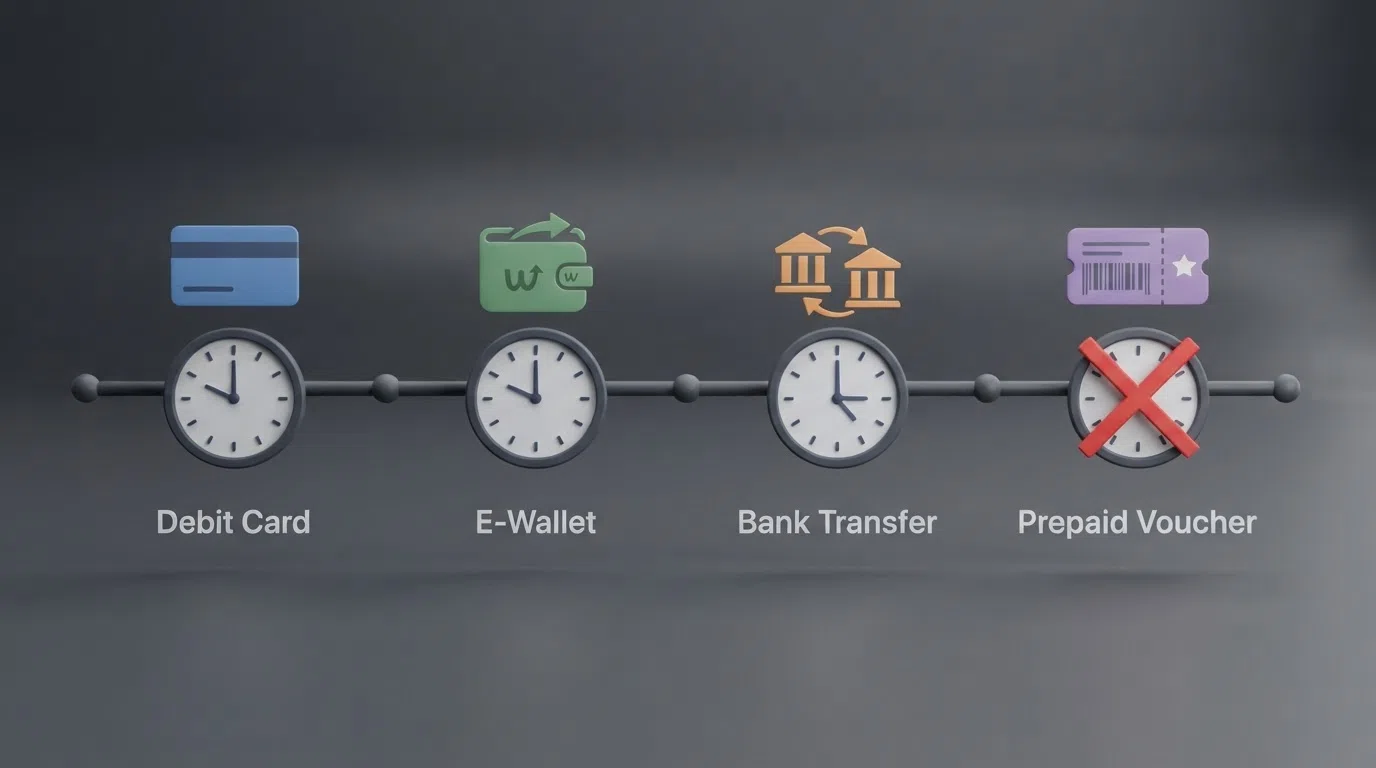
The reason is evidence-led. When the Gambling Commission consulted on the credit card ban, 22% of online gamblers who used credit cards to fund play were already classified as problem gamblers — a rate roughly four times the baseline. The Commission concluded that borrowing to gamble was a marker of harm in its own right. The ban was the policy response, and it has reshaped the deposit landscape: debit cards, e-wallets, open banking, prepaid vouchers and a handful of mobile-billing options now divide the territory credit cards used to occupy.
Two other rules govern the day-to-day experience. First, all payments to and from a player must move through a payment service provider as defined in the Payment Services Regulations 2017 — a structural requirement under LCCP 5.1.2. That requirement is why cryptocurrency is functionally absent from the GB-licensed market: the UKGC has not approved crypto as a payment route, and any operator considering it would have to satisfy a full source-of-funds history. Second, the Gambling Commission treats closed-loop payment systems as best practice under its anti-money-laundering guidance. A withdrawal should, wherever possible, return to the same method that funded the deposit. That principle explains why Paysafecard and Boku are deposit-only methods — there is no closed loop to close.
Pulled together, those rules give a UK player a payment menu that is narrower than almost any other regulated iGaming market, but also safer. The narrower menu concentrates volume on methods that are fast, regulated, and routed through a PSP. The safety comes from the closed loop and the KYC check that gates the first withdrawal. For a player choosing a method, the practical question is not “what can I pay with?” — it is which of the approved methods best fits what they actually want from the casino.
What Casino Payment Methods Exist in the UK
Every UK-facing casino runs on the same backbone of payment types, with variations in which each operator enables. The set begins with debit cards — Visa and Mastercard — which are the universal baseline: every operator on the UKGC register accepts them, and almost every welcome bonus is built to be claimed with one. The set then layers in e-wallets (PayPal, Skrill, Neteller), which trade a slower, fee-laden deposit for the fastest withdrawal window. Bank transfer sits beneath them, slow but never refused, with open banking and Pay by Bank sitting on top of the same rails: instant deposit through the player’s mobile banking app, no card data leaves the handset.
Prepaid vouchers — Paysafecard is the survivor here — let a player fund an account without sharing bank details at all, but the trade is that they cannot withdraw back to a voucher, so a second method is required for cashout. Mobile billing under Boku adds deposit via phone bill, capped hard at £30 per transaction and £240 per calendar month. Apple Pay and Google Pay are digital wallets that piggyback on the underlying debit card, offering biometric checkout on a phone and a withdrawal path that tracks the card’s. Revolut, AstroPay and a handful of fintech prepaid cards round out the menu, each with thinner operator support than the core methods.
The conspicuous gap is credit cards. A UK player cannot fund a casino account with one, and any page that offers credit card deposits is offering play outside the licensed system.
Deposit vs Withdrawal: Why the Same Method Works Differently Each Way
A casino deposit and a casino withdrawal look like the same transaction in reverse, but the plumbing is different and the player pays the difference. Deposits are instant across virtually every method at a GB-licensed operator — the operator is taking the risk on a known player and is happy to credit the account immediately so the player can play. Withdrawals, on the other hand, sit behind two sequential delays: the casino’s internal approval queue and the banking rail the money then travels on.
That second delay is the one most players feel. E-wallets clear in 1–24 hours once the operator approves the cashout, because the money moves between two internal accounts. Debit card withdrawals take 1–3 business days through Faster Payments, with Visa Fast Funds and Mastercard Send cutting that to sub-30 minutes at supported banks. Bank transfers take 3–5 business days. The same debit card that lands a deposit in under a second can take three days to send the money back, and the reason is purely which rail the operator is using.
The closed-loop principle explains why some methods are deposit-only. Paysafecard is a 16-digit PIN: the operator receives the deposit, but no comparable rail exists for a withdrawal back to a physical voucher. Boku charges the deposit to a phone bill — there is no standing account to credit when the player wants to cash out. In both cases the operator must require a second method to receive the withdrawal, which is why every casino’s withdrawal page will ask for a fallback even when the deposit was a voucher.
Debit Card, E-Wallet or Phone: Which Payment Type Matches Your Play
Speed, bonus eligibility and the simplicity of one method covering both directions are the three criteria that actually move a payment-method choice. The trade between them is the substance of the decision. A speed-first player should pick an e-wallet or open banking — PayPal, Skrill, Trustly or Pay by Bank all clear withdrawals inside a working day at most UK operators. A bonus-first player should fund with a debit card: across the ten operators reviewed for this article, every welcome offer is bonus-eligible on debit, while e-wallets and prepaid methods are excluded at Coral, William Hill, Betfred, Betfair, Ladbrokes and 32Red . A player who wants one method to cover both deposit and withdrawal without thinking about it lands on the same answer — debit card, with Apple Pay or Google Pay as the biometric short-cut on a phone.
The method that gives none of those advantages and is still chosen is Paysafecard. It is deposit-only, often excluded from the welcome bonus, and forces the player to register a second method for withdrawals. The reason players choose it is that it works without a bank account, a credit check or a card in the wallet, and that combination is rare enough in the GB-licensed market to keep it in the menu at every major operator.
Every UK Casino Deposit Channel, Compared by Speed and Real-World Value
The list below covers every payment type a Great Britain-licensed casino will accept, with the deposit and withdrawal behaviour of each and the bonus rules that come with it. Speed claims draw on tested data from independent fast-withdrawal studies rather than operator-stated “instant” labels.
Debit Cards: Why Visa and Mastercard Are the UK Casino Default
The debit card is the baseline payment method in the UK and the one every GB-licensed operator is built to accept. Deposits are instant, because the operator assumes the risk on a card it can charge back if anything goes wrong. Withdrawals take 1–3 business days through standard Faster Payments, with Visa Fast Funds and Mastercard Send cutting that to sub-30 minutes at supported banks. Ladbrokes, Coral, William Hill and bet365 all set a £5 minimum on debit , which is the floor of the market.
The bonus angle is what makes debit cards the default rather than simply the universal one. Almost every welcome offer at every UK operator is bonus-eligible on debit, and at Coral the welcome bonus requires Visa or Mastercard debit, Apple Pay or Google Pay to qualify at all. A player who wants the maximum number of offers open to them funds with a debit card; a player who uses an e-wallet or voucher accepts that several offers will simply not be available. Contactless online is the same network as contactless in a shop — the deposit clears through Visa or Mastercard rails, with the issuing bank applying any fraud or 3-D Secure checks in the background.
E-Wallets: PayPal, Skrill, Neteller and the Fastest Withdrawal Route
E-wallets sit between the player’s bank and the casino as a holding account. The deposit moves from the bank to the wallet first and then to the casino, which is why deposits can take longer than a card swipe and why fees can apply on the way in. The withdrawal is the win: once the casino approves the cashout, the money arrives in the e-wallet in minutes rather than days, because no banking rail is involved. PayPal, Skrill and Neteller all clear withdrawals in 0–24 hours at Ladbrokes, Coral and Sky Vegas once the operator’s internal approval is done .
The penalty is the bonus small print. Ladbrokes accepts PayPal and Skrill but excludes Paysafecard from its welcome offer. Coral accepts PayPal, Skrill and Paysafecard but excludes all three from its welcome offer — only Visa/Mastercard debit, Apple Pay and Google Pay qualify. William Hill excludes Apple Pay, PayPal, Paysafecard and certain prepaid cards from its 200-free-spin welcome. Betfair excludes e-wallets and Apple Pay from its 100-free-spin package. Across the ten operators reviewed, e-wallets are bonus-eligible at bet365, 888 Casino, Sky Vegas and Ladbrokes for the most part, and excluded at Coral, William Hill, Betfair, Betfred and 32Red. The fastest withdrawal method in the market is, at four of the biggest UK brands, the one that costs the player the welcome offer.
Bank Transfer and Open Banking: Trustly, Pay by Bank and the Instant Shift
The phrase “bank transfer” covers two different things in 2026. The older version is a manual transfer from a bank account to a casino, which takes 1–3 days to land and 3–5 banking days to return. The newer version is open banking — Trustly, Pay by Bank, Volt or TrueLayer — which moves money directly from a bank account to the casino through the player’s mobile banking app, with biometric authentication and no card data shared. Open banking deposits clear in seconds. Open banking withdrawals are typically same-day at operators that support them, because the money is travelling back through the same Faster Payments rail the deposit came in on.
The economic logic is why open banking is gaining ground at UK operators. Pay by Bank transactions are often cheaper than card-funded deposits and also reduce exposure to chargebacks, as noted by industry analysis of the post-card-ban shift in UK casino payments. The player experience is the carrot. bet365 supports Trustly with withdrawals in 1–4 hours and a £100,000 maximum deposit per transaction. Sky Vegas supports Trustly with the same 1–4 hour withdrawal window. 888 Casino and 32Red both support Trustly for same-day withdrawals . The only trade-off is that not every bank has a mobile-banking app that supports the open-banking flow, and the very largest UK high-street banks do — the smaller and challenger banks are still filling in coverage.
Paysafecard: Prepaid Casino Deposits Without a Bank Account
Paysafecard is a 16-digit PIN sold at retail and online. The PIN is the deposit: the player enters the digits, the casino credits the account, and the player has funded a session without sharing a bank account, a card number or any personal data beyond a name and date of birth. The cost is that Paysafecard is deposit-only. The closed-loop principle under UKGC AML guidance means the casino needs a way to return the money, and a spent voucher is not a rail. Every Paysafecard deposit must be paired with a second method for withdrawals.
The bonus angle is worse than the withdrawal angle. Ladbrokes, Coral, William Hill, bet365 and Betfred all exclude Paysafecard from their welcome offers . That is five of the ten operators reviewed. A player choosing Paysafecard as their primary method is, in practice, choosing to forfeit the welcome offer at half the market. The reason to choose it anyway is privacy and access: a Paysafecard deposit requires no bank account, no card and no credit check, which makes it the standard fallback for players who do not have — or do not want to use — mainstream banking rails.
Apple Pay and Google Pay: Tap-and-Play Casino Deposits
Apple Pay and Google Pay are digital wallets that sit on top of a debit card. On a phone, the deposit goes through with Face ID or fingerprint, no card entry, no 3-D Secure code. The deposit is instant. The withdrawal path is whatever the underlying card supports — typically 0–24 hours where the operator and the issuing bank both support Fast Funds or Send. The bonus rules are split. Ladbrokes accepts Apple Pay and Google Pay, both at a £5 minimum and both eligible for its welcome offer. Coral requires Apple Pay or Google Pay for the welcome offer, alongside debit card. William Hill excludes Apple Pay from its 200-free-spin welcome. Betfair excludes Apple Pay from its 100-free-spin welcome. Betfred excludes both Apple Pay and Google Pay from its 200-free-spin welcome . The pattern across the ten operators is that Apple Pay and Google Pay are usually accepted for deposits, sometimes required for the welcome offer, and sometimes excluded from it — the small print decides.
Boku and Pay by Mobile: Phone-Bill Casino Deposits With Built-In Caps
Boku deposits are charged to a player’s mobile phone bill or deducted from prepaid credit. The deposit appears on the casino balance within seconds, and the player pays it when the phone bill comes due. The hard limits are network-level, not casino-level: £30 per single transaction and £240 per calendar month per subscriber. Those caps exist because Boku is classified as a premium-rate service and has been regulated by Ofcom since 1 February 2025, under the Regulation of Premium Rate Services Order 2024. Ladbrokes accepts pay by phone among its nine deposit methods.
Boku is deposit-only. The closed-loop rule means the casino must pay winnings back to a different method, and most operators that take Boku will require a registered debit card or e-wallet for withdrawal. The £240 monthly ceiling also makes Boku a small-balance method by design — it suits a player who wants a hard cap on what they can spend, not one who wants a high-roller rail.
Revolut, AstroPay and the Alternative Payment Frontier
Revolut is a fintech app that issues a debit card and supports instant transfers, and it shows up at Ladbrokes, Coral and 32Red as a standard debit-card alternative at a £5 minimum . AstroPay is a virtual prepaid card that has thinner UK casino penetration; this guide treats its coverage qualitatively because the operator sweep did not surface per-operator AstroPay terms this run. Both methods sit in the same role: an alternative to a high-street bank debit card, often with faster top-up and lower fees for the player, but with smaller operator menus than the core methods.
For a UK player, the practical question is whether the chosen operator accepts the method. Revolut is broadly supported. AstroPay is supported at some operators and absent at others. Where the operator does not list the method, the deposit will not go through and the player will be pushed back to a debit card or e-wallet. Checking the cashier page before registering is the only way to confirm.
What Makes a Casino Payment Safe: KYC, Closed Loops and UKGC Rules
Three layers of regulation protect a player’s money at a Great Britain-licensed casino. The first is the licence itself: the operator must hold an active GB operating licence, and the UK Gambling Commission publishes the register that lets a player confirm it. The second is the payment rule under LCCP 5.1.2 — every payment must move through a payment service provider under the Payment Services Regulations 2017, which means the operator cannot run its own bank rails and cannot handle funds as an unlicensed e-money institution. The third is the closed-loop principle under UKGC anti-money-laundering guidance: withdrawals should return to the deposit method wherever possible, and any departure from that must be risk-assessed and documented.
The closed-loop rule is why the first withdrawal takes longer than the second. Before a casino can release funds it must verify the player’s identity — name, address, date of birth and, increasingly, source of funds. That verification is the KYC check, and it sits ahead of the withdrawal rather than alongside it. Once it is done, the closed-loop policy means a withdrawal to a PayPal account that was used to deposit is a same-day transaction, while a withdrawal to a different account requires additional checks.
The credit card ban under LCCP 6.1.2 cuts the same direction. The Gambling Commission extended the ban in 2020 to credit-card-funded payments through any money service business, including e-wallets and fintech e-money institutions. A player who tries to fund a casino via a credit-card-funded PayPal account will be declined at a GB-licensed site, and that is by design: the ban exists to stop borrowing from being the route into gambling.
Payment Methods at a Glance: Speed, Limits and Bonus Rules
The table below pulls the speed, withdrawal availability and bonus eligibility of each method type into one view. “Typically bonus-eligible” reflects the pattern across the ten operators reviewed, not a guarantee at any single brand.
| Payment Method | Deposit Speed | Withdrawal Speed | Withdrawals Available? | Typically Bonus-Eligible? |
|---|---|---|---|---|
| Debit card (Visa/Mastercard) | Instant | 1–3 business days; sub-30 min via Visa Fast Funds / Mastercard Send at supported banks | Yes | Yes |
| E-wallets (PayPal, Skrill, Neteller) | Instant | 0–24 hours after approval | Yes | Often excluded — varies by operator |
| Bank transfer (manual) | 1–3 business days | 3–5 business days | Yes | Yes |
| Open banking (Trustly, Pay by Bank) | Instant via mobile banking app with biometric auth | Same day at most operators | Yes | Yes |
| Paysafecard | Instant | — | No (deposit only) | Usually excluded from welcome offers |
| Apple Pay / Google Pay | Instant (biometric) | Tracks underlying card — typically 0–24 hours | Yes | Varies by operator |
| Boku / Pay by Mobile | Instant to phone bill | — | No (deposit only) | No |
| Revolut | Instant | 0–24 hours at supported operators | Yes | Varies by operator |
Mobile Casino Payments: What Changes When You Pay From Your Phone
A phone is not just a small desktop. The mobile payment experience at a GB-licensed casino is built around biometric authentication, app-stored credentials and in-session deposit prompts — three features that change the speed and friction of paying in ways a desktop casino site does not match. The same payment method can clear in five seconds on a phone and fifteen on a laptop, not because the network is faster but because the inputs are different.
The deposit flow on a phone is built around the device’s native wallets. Apple Pay and Google Pay both prompt for Face ID or fingerprint, pull the card from the wallet, and clear the deposit without a card number being entered. Open banking uses the same biometric step inside the player’s banking app rather than the casino’s. Boku charges the deposit to the phone bill with a one-tap confirmation, capped at £30 per transaction. The result is that the most common mobile deposit methods are all but invisible to the player: nothing is typed, nothing is remembered, and the deposit lands before the player has looked up from the screen.
Casino apps then add a layer of stored-credential convenience on top. The first deposit through the app registers the payment method with the operator, and every subsequent deposit is a one-tap confirmation. The in-session deposit prompt — the pop-up that appears when a player’s balance drops below a threshold — is the same flow underneath, with the same biometric check. On a desktop, the same prompt requires a card number, an expiry date and a 3-D Secure code. On a phone, it requires a thumb.
Biometric Checkout: Why Paying on Mobile Is Often Faster Than Desktop
Face ID and fingerprint authentication are not just faster than typing card details — they are also a second factor. A biometrically confirmed payment on a phone is, in regulatory terms, strong customer authentication under PSD2, and that satisfies the 3-D Secure step that a desktop deposit would otherwise prompt for. The phone becomes the second factor. The casino does not need to send a code to a separate device. The deposit completes inside the wallet flow with no interruption.
The security upside compounds. A card number typed into a desktop browser can be captured by a compromised browser extension or a phishing overlay. A biometric confirmation on a phone requires the device to be unlocked by the rightful owner, and the card data is tokenised inside the wallet — the operator never sees the real number. The practical effect is that mobile deposits, at GB-licensed operators using Apple Pay, Google Pay or open banking, are simultaneously faster and harder to intercept than desktop deposits through the same operator.
Mobile Slots and In-App Deposits: How Casino Apps Handle Payments
Casino apps handle payments in two distinct ways. The first is a thin wrapper around the mobile browser site: the app loads the cashier page as it would in a browser, with the same fields and the same flow. The second is a native integration where the operator’s app stores payment credentials in its own secure container and prompts the player with a one-tap deposit button mid-session.
The native integration is the better experience, and the operators with the broadest mobile payment support tend to be the ones with mature apps. Sky Vegas and bet365, for example, both support Trustly and Apple Pay in their mobile apps with 1–4 hour withdrawals on the instant methods . The same methods work on a desktop, but the in-app flow cuts several steps. The deposit prompts inside the app also tend to be more conservative than the desktop equivalents — a smaller suggested top-up, a clearer “this is real money” warning — because the operator is aware that the player is in a session and may not be making a considered decision.
For a player, the practical question is whether the chosen operator has a native app and whether the methods they want to use are available in it. Most of the ten operators reviewed offer iOS and Android apps with broadly the same payment menu as the desktop site; the differences show up in withdrawal flows, where the app may default to a different method than the desktop.
10 UK Casinos Ranked by Payment Method Support
The table below compares ten Great Britain-licensed online casinos on payment-method range, minimum deposit, the fastest available withdrawal window, the headline welcome bonus and which payment methods the bonus accepts. All ten operators were confirmed as active on the UK Gambling Commission’s public register. Minimum deposit and maximum deposit figures draw on each operator’s help-centre pages; withdrawal windows draw on the same sources together with independent fast-withdrawal test data.
| Operator | GB Licence | Payment Methods | Min Deposit | Fastest Withdrawal | Welcome Bonus | Bonus Method Restrictions |
|---|---|---|---|---|---|---|
| Ladbrokes | Yes | 10 — Visa, Mastercard, Apple Pay, Google Pay, PayPal, Skrill, Revolut, Paysafecard, bank transfer, pay by phone | £5 (most), £10 (PayPal) | 0–24h (e-wallets, Apple Pay) | Bet £10 get 100 no-wagering free spins | Paysafecard excluded; debit/Apple Pay/Google Pay required |
| bet365 | Yes | 9 — Visa/MC/Maestro, PayPal, Apple Pay, Google Pay, Trustly, Paysafecard, bank transfer | £5 (debit, PayPal, Paysafecard) | 1–4h (e-wallets, Trustly) | 500 free spins, no wagering | Paysafecard excluded |
| Sky Vegas | Yes | 5 — Visa/MC debit, PayPal, Trustly, Apple Pay, bank transfer | £10 | 1–4h (instant methods) | 200 free spins, no wagering | Not specified |
| 32Red | Yes | 7 — Visa/MC/Maestro/Electron, Trustly, Apple Pay, Google Pay, Revolut, Paysafecard, bank transfer | £5 (debit, Trustly, Apple Pay, Revolut), £10 (Paysafecard) | Same day (e-wallets) | 320 free spins at 10p on Big Bass Splash | Debit or instant bank transfer only |
| 888 Casino | Yes | 7 — Visa/MC, PayPal, Apple Pay, Neteller, Trustly, bank transfer, Luxon Pay | £10 | Same day (Visa, Apple Pay, Trustly, Luxon Pay, Pay by Bank) | 100% up to £100, 10x wagering | Not specified |
| William Hill | Yes | 7 — Visa/MC debit, PayPal, Apple Pay, Skrill, Paysafecard, bank transfer, cash vouchers | £5 (debit), £10 (e-wallets) | Within hours (e-wallets) | 200 free spins at 10p on Big Bass Splash | Apple Pay, PayPal, Paysafecard, certain prepaid excluded |
| Coral | Yes | 7 — Visa/MC debit, Apple Pay, Google Pay, PayPal, Revolut, Paysafecard, bank transfer | £5 (debit, Apple Pay, Google Pay, Revolut, Paysafecard), £10 (PayPal) | 0–24h (e-wallets) | Bet £10 get 100 free spins, 10x wagering | Debit, Apple Pay or Google Pay required; PayPal, Skrill, Paysafecard excluded |
| Betfred | Yes | 7 — Visa/MC debit, PayPal, Skrill, Apple Pay, Google Pay, Paysafecard, bank transfer | £5 (debit), £5.50 (PayPal), £10 (Apple Pay, Google Pay, Paysafecard) | Up to 24h (PayPal) | 200 free spins on £10 stake on slots | PayPal, Apple Pay, Google Pay, Paysafecard excluded |
| Betfair | Yes | 3 — Visa/MC debit, Apple Pay, bank transfer | — | — | 50 + 50 free spins at 10p on Jackpot King slots | E-wallets and Apple Pay excluded |
| Virgin Games | Yes | Debit card, PayPal, bank transfer (expected) | — | — | — | — |
Ladbrokes: 9 Payment Methods and No-Wagering Spins for Debit Card Depositors
Ladbrokes runs the widest payment menu of any operator in this comparison, with ten deposit methods covering the full range of the UK market: Visa, Mastercard, Apple Pay, Google Pay, PayPal, Skrill, Revolut, Paysafecard and bank transfer, plus pay by phone as a tenth rail. The minimum is £5 across most methods, with PayPal at £10, and the maximum is £2,000 across the board. E-wallet and Apple Pay withdrawals clear in 0–24 hours; bank transfers take 1–3 days.
The headline offer is bet £10 get 100 free spins on selected slots at 10p each, with no wagering on the winnings — the spins land, the winnings are real money. The catch sits in the eligible methods. Paysafecard deposits do not qualify, and the bonus itself requires a debit card, Apple Pay or Google Pay deposit. A player who wants the welcome offer must fund with one of those three. The verdict: Ladbrokes is the strongest pick in this set for a player who wants method range and a no-wagering welcome, provided the deposit method is one of the three bonus-eligible rails.
bet365: 500 Free Spins With Zero Wagering Across 8 Payment Methods
bet365’s casino welcome offer is the largest no-wagering free-spin package in this comparison — 500 free spins on selected slots after a minimum £10 deposit, with zero wagering on the winnings and 30 days to use them. The selected games named in the operator’s terms are Eye of Horus, Curse of the Bayou, Magic Forge and Wrath of the Deep.
The payment menu is broad: Visa, Mastercard and Maestro debit, PayPal, Apple Pay, Google Pay, Trustly, Paysafecard and bank transfer . The minimum deposit is £5 on debit, PayPal and Paysafecard. The withdrawal window for e-wallets and Trustly is 1–4 hours, and the Trustly maximum deposit is £100,000 per transaction — a ceiling high enough that no recreational player will brush against it. The only exclusion is Paysafecard from the welcome offer, which is the standard line across this set. The verdict: for a player who wants the biggest no-wagering welcome and the fastest withdrawal, bet365 is the cleanest answer in the comparison.
32Red: 320 Free Spins but Debit Card or Bank Transfer Only for the Bonus
32Red supports ten payment methods — Visa, Mastercard, Maestro and Electron debit, Trustly, Apple Pay, Google Pay, Revolut, Paysafecard and bank transfer — and the minimum deposit is £5 on debit, Trustly, Apple Pay and Revolut, with Paysafecard at £10. E-wallet withdrawals are same-day at 32Red; debit and bank transfer take 1–3 days.
The welcome offer is 320 free spins at 10p each on Big Bass Splash (96.71% RTP, Pragmatic Play) on a £30 deposit and stake, with 10x wagering on winnings and a 30-day claim window. The bonus gate is the tightest in this comparison: only debit card or instant bank transfer qualify. A player funding with Apple Pay, Google Pay, Revolut, Trustly, Paysafecard or any e-wallet will not receive the welcome offer. The deposit threshold is also higher than most — £30 rather than £10. The verdict: 32Red is the right pick for a player who is happy to fund with debit or instant bank transfer, who wants a high-spin-count welcome on a single named game, and who does not mind the £30 stake requirement.
888 Casino: The Only Matched-Deposit Bonus in This Comparison
888 Casino’s welcome offer is the only percentage-match bonus in this set: 100% up to £100, with 10x wagering on selected slots within 90 days and a £100 cap on bonus winnings. The bonus type is different from the free-spin packages elsewhere in the table — it is deposit-matched, not spin-credited — and the conditions reflect that.
The payment menu is seven methods: Visa and Mastercard, PayPal, Apple Pay, Neteller, Trustly, bank transfer and Luxon Pay. The minimum deposit is £10 across all methods. Same-day withdrawals apply to Visa, Apple Pay, Trustly, Luxon Pay and Pay by Bank; wire transfer takes 2–5 working days. The bonus method restrictions were not stated in the help-centre pages reviewed, and the 90-day wagering window is the longest in the comparison. The verdict: a player who wants a percentage-match bonus with a long claim window and a short withdrawal window will find 888 Casino the natural fit; a player who wants no-wagering free spins should look elsewhere in the table.
William Hill: 200 Free Spins but Four Payment Methods Block the Bonus
William Hill accepts seven payment methods — Visa and Mastercard debit, PayPal, Apple Pay, Skrill, Paysafecard, bank transfer and cash vouchers — and the minimum is £5 on debit, £10 on e-wallets. E-wallet withdrawals are within hours; debit withdrawals take 2–5 days. The cash-voucher rail is unusual in the comparison and is a legacy of William Hill’s high-street bookmaker heritage.
The welcome offer is 200 free spins at 10p on Big Bass Splash (96.71% RTP) on a £10 minimum deposit and wager, with 10x wagering on winnings and a £30 cap on cashout. Spins expire after 72 hours, the shortest bonus validity in the table. The exclusions are the widest in the comparison: Apple Pay, PayPal, Paysafecard and certain prepaid cards are all excluded from the welcome offer. A player funding with a debit card or bank transfer gets the bonus; a player funding with anything else does not. The verdict: William Hill is the right pick for a player who is comfortable funding with a debit card, who wants the £30 cashout cap acknowledged, and who can use the spins within 72 hours.
Coral: Debit Card, Apple Pay or Google Pay Required for the Welcome Bonus
Coral’s payment menu is seven methods: Visa and Mastercard debit, Apple Pay, Google Pay, PayPal, Revolut, Paysafecard and bank transfer. The minimum is £5 across debit, Apple Pay, Google Pay, Revolut and Paysafecard, with PayPal at £10. The maximum is £2,000 across all methods. E-wallet withdrawals clear in 0–24 hours; debit and bank transfer take 1–3 days.
The welcome offer is bet £10 get 100 free spins at 10x wagering, and the bonus gate is the same trio Coral uses throughout: Visa or Mastercard debit, Apple Pay or Google Pay. PayPal, Skrill and Paysafecard deposits are all excluded. The penalty for funding with a non-eligible method is sharper at Coral than at most operators in the comparison, because the eligible-method set is narrow and the alternative methods are all common ones. The verdict: a player who plans to fund with Apple Pay or Google Pay on a phone will find Coral a clean fit; a player who wants PayPal or Paysafecard will not.
Betfred: 200 Free Spins but Four Payment Methods Miss the Bonus
Betfred’s payment menu is seven methods — Visa and Mastercard debit, PayPal, Skrill, Apple Pay, Google Pay, Paysafecard and bank transfer — with a £5 minimum on debit, £5.50 on PayPal, and £10 on Apple Pay, Google Pay and Paysafecard . Debit withdrawals take 2–5 banking days; PayPal clears in up to 24 hours.
The welcome offer is 200 free spins on selected games on a £10 stake on casino slots, with 7-day expiry from credit . The exclusions are PayPal, Apple Pay, Google Pay and Paysafecard — four methods, all of them common. A player funding with a debit card or Skrill gets the bonus; everyone else does not. The verdict: Betfred is the right pick for a player who is willing to fund with a debit card and accept the 2–5 day debit withdrawal window; the 7-day spin expiry is short and the bonus-method gate is wider than at most operators in the table.
Sky Vegas: 200 No-Wagering Free Spins and 1–4 Hour Withdrawals
Sky Vegas runs a streamlined five-method payment menu — Visa and Mastercard debit, PayPal, Trustly, Apple Pay and bank transfer — with a £10 minimum and a £10,000 daily maximum. The withdrawal window is 1–4 hours on the instant methods and 2–5 working days on standard bank transfer. The Flutter Entertainment ownership puts Sky Vegas in the same group as Betfair and Paddy Power, but the payment menu is broader than Betfair’s.
The welcome offer is 200 free spins with no wagering requirement on a £10 deposit and spend, with 7 days from credit to use the spins and 30 days to meet the deposit-and-spend requirement. The no-wagering structure puts Sky Vegas alongside bet365 and Ladbrokes as a no-wagering welcome in this comparison. The payment-method exclusions for the bonus were not stated in the help-centre pages reviewed, which is a small gap in the data. The verdict: Sky Vegas is the right pick for a player who wants no-wagering free spins, a fast 1–4 hour withdrawal, and is comfortable with a smaller method menu than the rest of the table offers.
Betfair: 100 Free Spins With the Narrowest Payment Method Range
Betfair runs the narrowest payment menu in this comparison: only Visa and Mastercard debit, Apple Pay and bank transfer. The minimum deposit, maximum deposit and withdrawal speed were not stated in the help-centre pages reviewed this run, and the Flutter Entertainment ownership is shared with Sky Vegas.
The welcome offer is 50 free spins at 10p on deposit and 50 more free spins after £10 spend, on selected Jackpot King slots including Crabbin’ for Cash Extra Big Catch, with 7-day validity. E-wallets are not on the menu at all. Apple Pay is on the menu but is excluded from the welcome offer, which is the contradiction the table shows: a method that is both accepted and excluded, depending on whether the player is depositing or claiming the bonus. The verdict: Betfair suits a player who is happy to fund with a debit card, who does not use an e-wallet anyway, and who does not need the broader method range.
Virgin Games: A Thin Payment Profile — Fewer Confirmed Details This Run
Virgin Games is Great Britain-licensed, confirmed on the UK Gambling Commission’s public register, and operates an online casino and bingo product. The expected core payment methods are Visa and Mastercard debit, PayPal and bank transfer, but the minimum deposit, maximum deposit, withdrawal speed, welcome bonus, wagering terms and payment-method exclusions were not confirmed in this round of research . The brand is one of the smaller ones in the GB-licensed comparison and the data set is correspondingly thinner.
A player considering Virgin Games should treat the brand as a confirmed licensed operator with an unverified payment profile, and check the cashier page directly for current terms. The closed-loop and KYC rules that apply at every GB-licensed casino still bind Virgin Games, so the structural protections around any deposit are in place — what the data does not confirm is the specific menu of methods, the deposit limits and the bonus terms at the time of reading. The verdict: a player who values confirmation over assumption will find Betfair, Sky Vegas, bet365 or Ladbrokes the easier operators to evaluate on payment-method terms alone; Virgin Games is worth a second look once current data is checked.
Why UK Gambling Laws Shape Every Payment You Make
The UK gambling market is built on a single statutory regulator and a layered set of secondary rules. The Gambling Commission sets the licensing conditions and codes of practice that govern every payment an operator can accept and every bonus an operator can advertise. The rules are not advisory; they are the conditions of the operating licence, and a breach is a licence breach. For a player, the consequence is that every payment method described in this guide exists within a regulatory frame that the operator cannot opt out of.

The first frame is the credit card ban. Since 14 April 2020, no Great Britain-licensed operator has been able to accept a credit card for remote gambling, and the ban has extended to credit-card-funded payments through e-wallets and money service businesses . The reason the ban exists is the UKGC’s consultation finding that 22% of online credit-card gamblers were already classified as problem gamblers — a rate roughly four times the baseline. The policy response was to remove the borrowing rail entirely. The result is that every “credit card accepted” claim in the UK market is, by definition, a debit card claim.
The second frame is the anti-money-laundering and Know-Your-Customer rule set. Every payment must move through a payment service provider under the Payment Services Regulations 2017 (LCCP 5.1.2). Identity must be verified before the first deposit, and that verification is the reason the first withdrawal takes longer than later withdrawals. Closed-loop payment systems are best practice under UKGC AML guidance, and any departure from closed-loop must be risk-assessed. The effect on the player is a withdrawal flow that always returns to the deposit method wherever possible, and a deposit flow that cannot be anonymous.
The third frame is the bonus and stake framework. Wagering requirements on bonuses are capped at 10x under LCCP Social Responsibility Code 5.1.1, in force from 19 December 2025, and mixed-product promotional offers combining betting, casino, bingo and lottery are banned. The statutory stake cap on online slots is age-banded: £5 per game cycle for players aged 25 and over (in force 9 April 2025) and £2 for players aged 18–24 (in force 21 May 2025), under SI 2025/215. A player cannot stake £10 a spin at a GB-licensed casino at any age, and a player aged 18–24 cannot stake £3 a spin. The framework also mandates responsible-gambling tools, which are covered in the next section.
The UK Gambling Commission: Who Sets the Rules for Casino Payments
The Gambling Commission is the single statutory regulator for gambling in Great Britain. It is an executive non-departmental public body sponsored by the Department for Culture, Media and Sport (DCMS), and it licenses operators, key personnel and software under the Gambling Act 2005. The Gambling (Licensing and Advertising) Act 2014 extended the regime to remote operators, making a GB licence compulsory at the point of consumption for any operator taking GB players, wherever that operator is based.
The three licensing objectives in Section 1 of the Gambling Act 2005 shape every rule that follows. The Commission must aim to prevent gambling from being a source of crime or disorder, to ensure gambling is conducted in a fair and open way, and to protect children and other vulnerable persons from harm or exploitation. Each licensing condition and code of practice traces back to one of those three objectives. The closed-loop payment guidance sits under the first. The fairness of bonus terms sits under the second. The age-verification and stake-cap rules sit under the third.
The public register of licence holders is the single source of truth for whether an operator holds a GB licence. Every operator in this article was confirmed as active on the register on 16 August 2026. The register also shows the licence type (operating, personal, software) and any conditions attached. For a player, the practical test is simple: the operator’s name appears on the register, the licence is current, and the licence covers remote casino. If any of those three is missing, the player is on an unlicensed site.
The Credit Card Ban: Why You Cannot Use a Credit Card at Any UK Casino
LCCP licence condition 6.1.2 prohibits any Great Britain-licensed operator from accepting a credit card in connection with remote gambling. The ban came into force on 14 April 2020, after a consultation in which the Gambling Commission found that 22% of online gamblers who used credit cards to fund play were already classified as problem gamblers . The Commission concluded that borrowing to fund gambling was itself a marker of harm, and removing the credit card rail was the policy response.
The ban is wider than the card itself. It extends to credit-card-funded payments through any money service business — an e-wallet, a fintech e-money institution, or any other intermediary that enables the credit-funded transfer. A player who funds a PayPal account with a credit card and then tries to deposit at a GB-licensed casino will be declined, because the underlying funding source is what the rule targets. The same logic applies to any prepaid card or e-money account that draws on a credit line.
The practical effect on payment choice is total. A UK player cannot pay with a credit card at any GB-licensed casino. A UK player can pay with a debit card, an e-wallet funded from a bank account, an open-banking transfer from a bank account, a prepaid voucher bought with cash or a debit, or a phone-bill deposit via Boku. Every method in the GB-licensed cashier is, by construction, a non-credit method.
AML, KYC and Why Your First Withdrawal Always Takes Longest
The first withdrawal at a GB-licensed casino is slower than every withdrawal that follows, and the reason sits in the anti-money-laundering and Know-Your-Customer framework. Identity verification has been mandatory before the first deposit at GB-licensed remote operators since 7 May 2019. The operator must verify the player’s name, address and date of birth before any funds are taken, and the verification sits ahead of the gameplay rather than ahead of the withdrawal.
The source-of-funds check sits ahead of the first withdrawal specifically. The UKGC has not approved cryptocurrency as a payment route, and any operator considering it would have to satisfy a full source-of-funds history — a paper trail showing where the deposit money came from. The closed-loop principle under UKGC AML guidance means the operator’s first task on a withdrawal is to confirm the destination matches the deposit method, and the second is to check that the funds being withdrawn are consistent with the player’s deposit history. The third is to apply any financial vulnerability checks triggered by the deposit pattern (covered in the next section). Those three steps are why a first withdrawal can take 24–72 hours even at an operator that processes repeat withdrawals in under an hour.
The structural rule that ties the whole thing together is LCCP 5.1.2: all payments must use a payment service provider under the Payment Services Regulations 2017. That requirement is what makes cryptocurrency functionally absent from the GB-licensed market, and what ensures that every deposit and withdrawal moves through a regulated intermediary rather than through the operator’s own bank rails.
GAMSTOP, Self-Exclusion and What Happens to Your Casino Account
GAMSTOP is the national multi-operator self-exclusion register for online gambling in Great Britain. It has been mandatory for all GB-licensed online operators since 31 March 2020, and a player who registers with GAMSTOP is blocked from every GB-licensed online casino, betting site and bingo site for the duration of the exclusion.
The exclusion periods are 6 months, 1 year, 5 years, or 5 years with auto-renewal. The exclusion cannot be cancelled early — a player who registered for 5 years cannot shorten it to 6 months partway through. The exclusion also continues for up to 7 years beyond the chosen expiry date if the player does not contact GAMSTOP to confirm they want the exclusion to end. GAMSTOP is online-only; the land-based equivalent is SENSE, which covers physical casinos in Great Britain.
GAMSTOP’s limit is its scope. It does not cover unlicensed sites. A player on an offshore Curaçao- or MGA-licensed casino that does not hold a GB licence is not in the GAMSTOP register’s reach, and self-exclusion at one of those sites will not propagate to GB-licensed operators. For a player who has registered with GAMSTOP and is tempted to use an unlicensed site to circumvent the block, the structural protections in this article — closed-loop, PSP-routed payments, KYC, ADR, UKGC complaints — do not apply.
Responsible Gambling Tools That Work Through Your Payment Account
The responsible-gambling framework at a GB-licensed casino is built into the payment infrastructure rather than added on top of it. The player does not opt into deposit limits; the operator is required to prompt for one before the first deposit. Self-exclusion propagates through every GB-licensed operator via GAMSTOP, not just the one the player is registered with. Financial vulnerability checks run on the deposit pattern itself, against publicly available data.
The first prompt a player sees is the financial limit prompt. From 31 October 2025, every operator must prompt the player to set a financial limit before the first deposit, and must make it easy to review and change that limit. A decrease is actioned immediately; an increase can be delayed. From 30 September 2026, a gross deposit limit must be offered with at least equal prominence to other responsible-gambling limits, which means a player cannot be shown a session-time limit more prominently than a deposit limit. The limit itself is player-set — Britain does not impose a nationwide state deposit or loss ceiling — but the offer of the limit is mandatory.
The second layer is GAMSTOP, covered in the previous section. The third layer is the operator-level toolkit: cooling-off periods (24 hours to several weeks), time-outs (typically 1 to 6 months), and self-exclusion at the operator itself (which can be longer than GAMSTOP’s 5-year ceiling). The fourth layer is the financial vulnerability check: from 28 February 2025, an operator must run a check at a net deposit threshold of £150 in a rolling 30-day period, using publicly available data — county court judgments, bankruptcy orders, individual voluntary arrangements, debt relief orders. A match triggers a more detailed affordability conversation.
The final layer is the help infrastructure outside the operator. The National Gambling Helpline (operated by GamCare) is free and 24/7 on 0808 8020 133 for England and Scotland, and 0808 2819 265 for Wales, with live chat also available. GamCare, GambleAware, the NHS gambling harm clinics, Gamblers Anonymous and SENSE all sit outside the operator and are free to the player. The statutory levy on operators funds part of this — 1.1% of gross gambling yield for remote casino from 6 April 2025, split 50% to NHS treatment, 30% to prevention, 20% to research.
Deposit Limits: The Mandatory Financial Cap Every UK Player Sets
RTS 12, in force from 31 October 2025, requires every GB-licensed operator to prompt the player to set a financial limit before the first deposit, and to make it easy to review and change the limit thereafter. A decrease to the limit must be actioned immediately. An increase can be subject to a cooling-off period of 24 hours or more, depending on the operator’s implementation. The point of the prompt is to make the limit a default rather than an opt-in: a player who does not want a limit still has to actively decline one.
From 30 September 2026, the rule extends to a gross deposit limit that must be offered with at least equal prominence to other responsible-gambling limits. A casino that puts a session-time limit in bold and a deposit limit in small grey type will be in breach. The player can still set the limit to whatever they want, including zero. The mandatory part is the offer, not the level.
Britain does not impose a nationwide state ceiling on deposits or losses. The cap sits at the stake side — £5 per game cycle for adults 25 and over, £2 for adults 18–24. The deposit side is player-set, and the operator must offer the setting.
Self-Exclusion, Cooling-Off and Transaction Blocking
GAMSTOP is the first escalation. A single registration blocks the player from every GB-licensed online operator for the chosen period, with no early cancellation and a 7-year tail after expiry if the player does not affirmatively contact GAMSTOP. For land-based casinos, SENSE is the equivalent. The two registers do not overlap, and a player who wants full coverage needs both.
Operator-level tools sit one step below GAMSTOP. Cooling-off periods run from 24 hours to several weeks and are intended as short breaks; time-outs run from 1 to 6 months and are intended as longer pauses. Operator-level self-exclusion can run for any period the player chooses, including longer than 5 years. Each tool blocks the player’s account at that operator specifically; GAMSTOP is the only tool that blocks the player at every GB-licensed online operator at once.
The financial vulnerability check is the data-driven layer. From 28 February 2025, an operator must run a check at a net deposit threshold of £150 in a rolling 30-day period, using only publicly available data — county court judgments, bankruptcy orders, individual voluntary arrangements, debt relief orders. A match does not block play automatically; it triggers a more detailed affordability conversation. Financial risk assessments (deeper, evidence-based affordability checks) are due to roll out in stages from 7 July 2026, with thresholds yet to be confirmed.
Where to Get Help: Helplines, Tools and NHS Treatment
The National Gambling Helpline is the front door. It is operated by GamCare, free, confidential and available 24/7 on 0808 8020 133 for England and Scotland, and 0808 2819 265 for Wales. Live chat is also available through the GamCare website. The helpline is the first call for any player, family member or friend who is concerned about gambling harm, and it routes callers into the right service for their situation.
GambleAware provides free tools and blocking software that restrict access to gambling sites and apps at the device level. GamCare runs the helpline, the live chat, online forums and a network of treatment providers. NHS gambling harm clinics offer specialist cognitive-behavioural therapy and addiction treatment in England, Scotland and Wales, with referral routes through the helpline or through a GP. Gamblers Anonymous runs peer-support meetings across the country, following a twelve-step model. SENSE runs the land-based casino self-exclusion register.
For a player who wants to act now, the fastest route is the helpline. For a player who wants to block themselves out of GB-licensed sites, the route is GAMSTOP. For a player who wants structured treatment, the route is the NHS clinics via GP referral or the helpline. The framework is built to be reached at any of those entry points without cost, without a referral and without the operator being involved.
How We Evaluated These Casino Payment Methods
Every featured operator in this article was confirmed as holding an active Great Britain operating licence on the UK Gambling Commission’s public register, with the register last checked on 16 August 2026. Per-operator payment-method data was drawn from each operator’s help-centre pages, published bonus terms and conditions, and independent fast-withdrawal test results where the operator has been tested.
The ranking criteria were payment-method range, minimum deposit, the fastest available withdrawal window, the headline welcome bonus and which payment methods the bonus accepts. No weightings or scores were applied beyond what the data shows. Where a data point — a minimum deposit, a maximum deposit, a withdrawal speed, a bonus restriction — was not confirmed in the research for this run, the entry shows an em dash rather than an estimated value. Virgin Games is the clearest case: the operator is GB-licensed and on the register, but the minimum deposit, maximum deposit, withdrawal speed and welcome-bonus details were not confirmed and are noted as such rather than estimated.
The data was collected against each operator’s UK-facing help pages and terms. The closed-loop, KYC and PSP rules under LCCP apply uniformly to every operator on the register, so those structural rules were drawn from the Gambling Commission’s published guidance rather than from operator sources. The credit card ban, the £30/£240 Boku caps, the Ofcom regulation of charge-to-mobile and the GAMSTOP framework were all sourced to the regulator or to primary legislation, not to operator marketing.
Frequently Asked Questions
What is the fastest casino withdrawal method in the UK?
E-wallets such as PayPal, Skrill and Neteller are generally the fastest withdrawal methods, often clearing within 1 to 24 hours once the operator approves the cashout. Open banking methods like Trustly also provide same-day withdrawals at many UK casinos, as they leverage the Faster Payments rail for instant processing.
Can I use PayPal for both deposits and withdrawals at UK casinos?
Yes, PayPal is widely supported for both deposits and withdrawals at many GB-licensed casinos. It operates as a closed-loop system, allowing you to fund your account and receive winnings seamlessly. Always check the operator’s cashier page first, as some brands may restrict PayPal usage for specific promotional offers.
Can my deposit method cost me a casino welcome offer?
Yes. Many UK operators exclude specific payment methods, such as e-wallets like PayPal and Skrill or prepaid vouchers like Paysafecard, from welcome bonus eligibility. Using these methods to fund your initial deposit may disqualify you from receiving free spins or matched-deposit bonuses. Always check the bonus terms before depositing.
What is the minimum deposit at UK online casinos?
Minimum deposit amounts vary by operator and payment method. While £5 or £10 is standard across most debit cards and e-wallets, some casinos may require a higher minimum for specific methods. Always verify the minimum deposit for your chosen method in the operator’s help centre or cashier section.
Why do some withdrawal methods take longer than others?
Withdrawal speeds depend on the banking rail used. E-wallets and open banking move funds between digital accounts instantly, while debit card withdrawals typically travel through Faster Payments, taking 1–3 days. Manual bank transfers are the slowest, often requiring 3–5 working days to clear depending on the banking provider’s processing times.
Payments – Casinos That Accept Bitcoin UK
Content created by the «Casinos That Accept Bitcoin UK» team