
Phone-Credit Casinos in the UK: What Actually Works (and What Costs You)
 Available in GB
*Current as of 16 August 2026, verified against the UK Gambling Commission public register.*
A phone bill is a deposit method, not a strategy. The fastest way to fund a UK casino from a mobile is to type a number, confirm an SMS and play. It is also one of the most restricted routes in: capped at £30–£40 per transaction, walled off from most welcome bonuses, and one-way only, with no path back out. The right question is not which casino lets you pay by phone. Nearly all UKGC-licensed brands do, at least at the cashier. The right question is what that deposit is worth once the bonus terms, the withdrawal method, the monthly ceiling and the processing fee have all done their work.
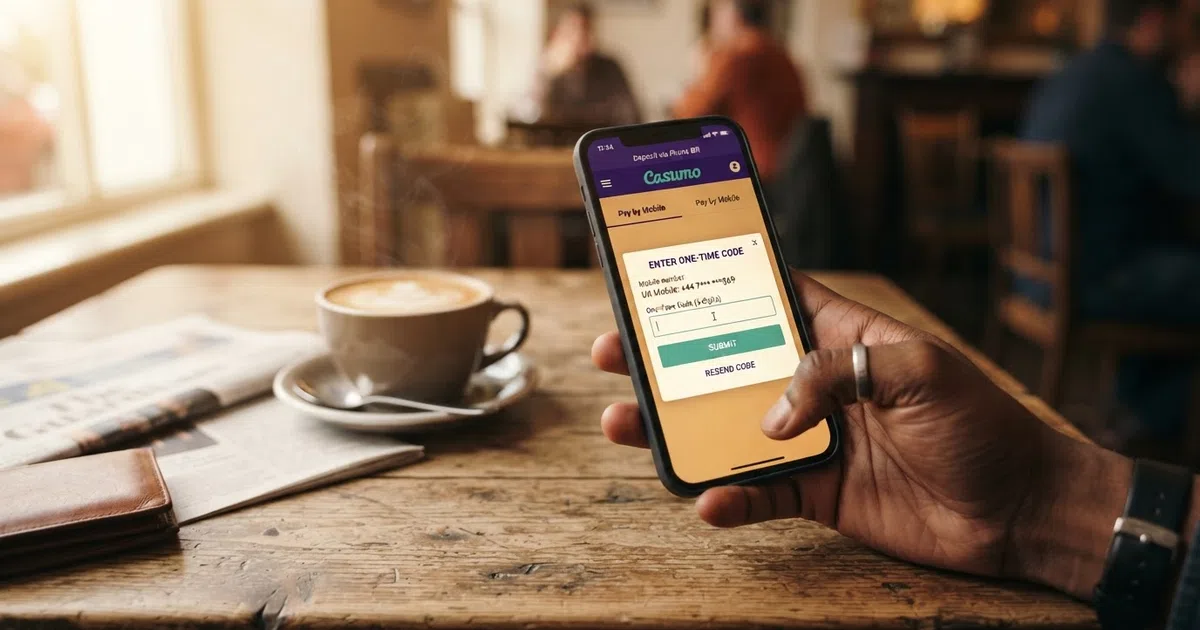
This guide ranks ten UKGC-licensed casinos on the criteria that matter when phone credit is the funding source. It walks the deposit mechanics step by step, unpacks why most welcome bonuses shut the door on phone-credit deposits, and lays out the legal and safer-gambling framework that shapes every choice on the list.
What Pay-by-Phone Casino Banking Actually Means for UK Players
“Pay with phone credit” in a casino context means exactly two things: the deposit is added to the next monthly phone bill (for contract customers) or deducted from the prepaid balance (for PAYG users). The casino never sees a card number. The network sees an authorisation request; the player sees an SMS code; the funds appear in the casino balance in seconds.
The UK market moved decisively to this model after Payforit’s retirement in 2019. Payforit was once the shared trust mark that gave UK charge-to-mobile payments a single identity. Its withdrawal left Fonix and Boku as the dominant carrier-billing platforms at UK casinos today. No new challenger has filled the gap since.
The distinction between postpaid (contract) and PAYG is practical, not cosmetic. A contract user defers the charge, so a £30 casino deposit next Tuesday lands as a phone-bill line item in three weeks’ time. A PAYG user pays up front, and the £30 leaves the prepaid balance the moment the SMS is confirmed. Both routes land at the same casino account; both carry the same statutory caps. They diverge on the question of whether the charge is felt immediately or absorbed into the monthly bill.
“Pay With Phone Credit” — What the Term Actually Covers
The shared mechanic is the SMS confirmation. A contract user deposits £30 and sees the charge on the next bill. A PAYG user deposits £30 and sees the balance drop on the spot. The casino does not know or care which model sits behind the mobile number; the carrier handles the distinction. What the casino sees is an authorisation that either routes through the monthly bill or pulls from prepaid credit, and a player who has already confirmed consent by tapping a one-time code.
PAYG users tend to use phone credit as a hard spending brake. The balance falls with each deposit; the casino cannot extract more than the phone holds. Contract users tend to use it as a deferred-payment convenience, with the discipline coming from a cap they cannot see until the bill arrives.
Mobile-First by Design — Why Phone Credit and Mobile Casinos Are a Natural Fit
The deposit flow stays on one device. A player on a phone never types a long card number into a small screen, never fumbles with an expiry date, never worries about whether the casino’s payment page will load over patchy mobile data. They tap “Pay by Mobile,” enter their number, confirm the SMS and play. The friction that a debit-card flow carries on mobile simply does not exist here. Funds appear in the casino account instantly, and the player is at the slot reels within a minute of the cashier opening.
Who Phone-Credit Casino Deposits Work For — and Who They Do Not
The PAYG player who wants a spending hard-stop will find the £30–£40 per-transaction ceiling useful. The contract user who values deferred payment over speed will find the SMS flow friction-free. The casual player who treats the casino as a five-minute distraction will find the one-tap deposit exactly what they want.
The high-volume depositor will not. The £240 monthly cap lands fast. A player who runs six £40 deposits in a single weekend is locked out for the rest of the calendar month. The bonus hunter will not, either. Most welcome offers treat phone-credit deposits as an excluded method, which means the headline “100% up to £1,000” never triggers on a Fonix or Boku deposit at the majority of UK casinos. And anyone who wants to withdraw winnings back to the funding source will find that path closed: carrier billing is deposit-only, and a debit card or bank account has to be registered before any cashout.
Funding Your Casino Account by Mobile Bill — Every Step, Every Limit and Every Fee
A phone-credit deposit is one of the simplest payment flows in UK gambling, and one of the most constrained. The mechanics are frictionless; the limits are statutory; the fees, where they exist, are not always visible before the deposit confirms.
Boku, Fonix, and the Ghost of Payforit — the Three Generations of UK Carrier Billing
Payforit was the original shared trust mark, the brand that gave UK charge-to-mobile payments a single recognisable identity for nearly a decade. It was retired in 2019 and has not been replaced. What replaced it is a duopoly: Fonix, which is the most-used platform at UK casinos today, and Boku, which operates in more than 90 countries and counts around 28 million users globally. Both integrate with the same SMS confirmation flow; both honour the same statutory caps. The difference for the UK player is largely the brand name that appears on the SMS, not the mechanics behind it.
No new challenger has emerged in the years since Payforit’s retirement. The barriers to entry are high: integrating with every major UK network, meeting the Phone-paid Services Authority’s registration regime, and convincing enough casinos to sign up to justify the build cost. Fonix and Boku hold the field.
| Provider | Status | UK Market Position | Supported UK Networks | Key Limitation |
|---|---|---|---|---|
| Fonix | Active | Most-used platform at UK casinos | EE, Vodafone, O2, Three, Tesco Mobile, GiffGaff, Sky Mobile | Deposit-only; no withdrawal path |
| Boku | Active | Global scale, 28M+ users, 90+ countries | EE, Vodafone, O2, Three, Tesco Mobile, GiffGaff, Sky Mobile | Per-transaction fee structure varies by casino |
| Payforit | Retired (2019) | Former shared trust mark | — | No longer operational |
Step by Step — How a Phone-Credit Casino Deposit Actually Works
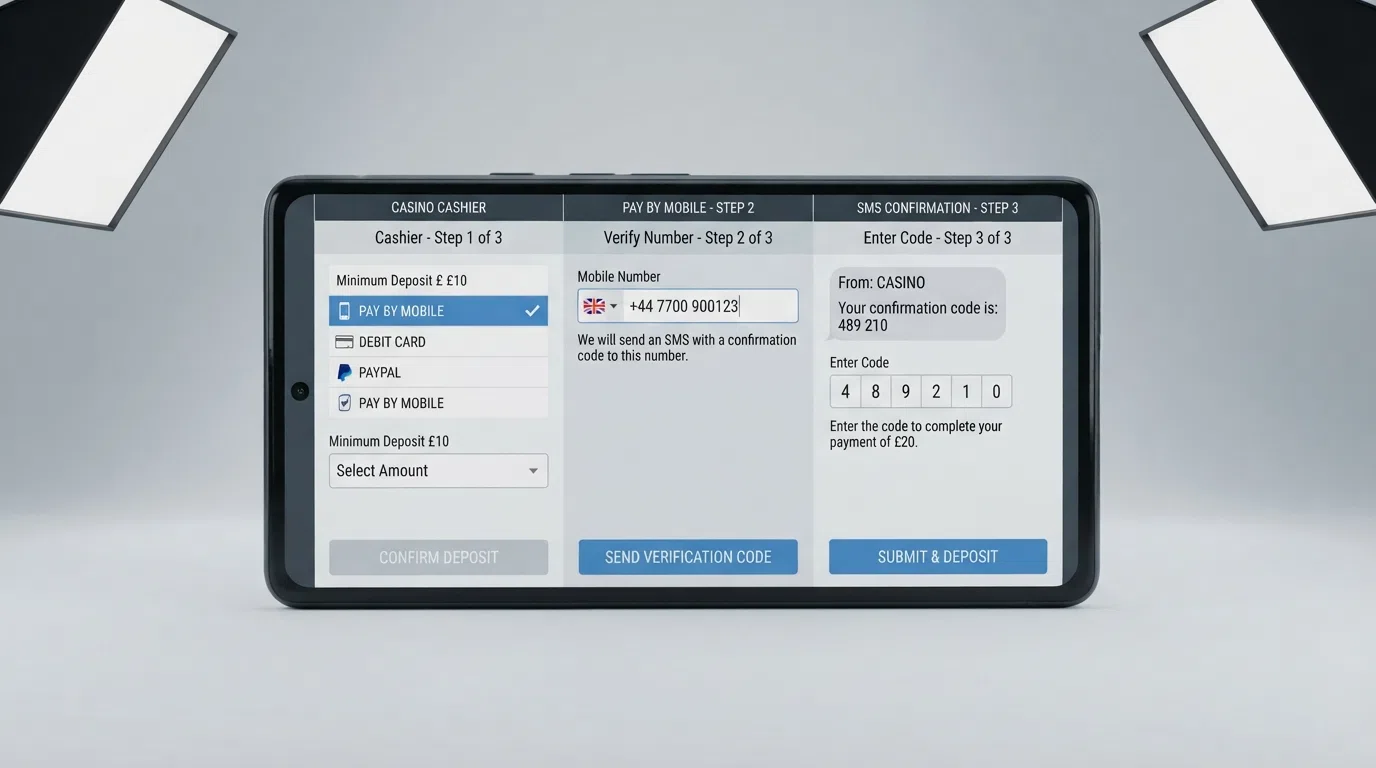
At the cashier, the player selects “Pay by Mobile” or “Pay by Phone.” They enter their mobile number. The casino’s payment provider routes the request to the carrier, and the player receives an SMS containing a one-time code. They type that code back into the casino screen to confirm. The funds appear in the casino balance instantly; the charge appears on the next monthly phone bill or as a PAYG deduction.
The whole flow takes under a minute. There is no card number to mistype, no three-digit security code, no banking-app authentication. What looks like simplicity hides a hard constraint underneath: the deposit is authorised, but it cannot be reversed through the same channel.
You Can Pay In, but You Cannot Cash Out — the Withdrawal Problem
Carrier billing is one-way. Winnings cannot be returned to a phone bill, a PAYG balance or any carrier-mediated route. The player must register an alternative withdrawal method before any cashout, typically a debit card or a bank transfer. This is not an oversight; it is the design. The Payment Services Regulations 2017 treat phone credit as a low-value payment instrument with built-in consumer protection, and the regulatory framework for refunds through that channel is narrow.
The friction shows up at cashout time, not deposit time. A player who funded their entire session by phone credit discovers at the moment of withdrawal that they have to enter card details they had no intention of using. For a casual mobile-first player, that is a minor inconvenience. For anyone sensitive about leaving card details with an operator, it is a reason to choose a different deposit method from the start.
The Deposit Ceilings — £30–£40 a Day, £240 a Month, and What They Mean in Practice
The per-transaction band sits at £30–£40, set at the network or provider level rather than by individual casinos. The monthly ceiling is £240 per subscriber under the Payment Services Regulations 2017. On top of that, the Phone-paid Services Authority applies a £40 per-day cap. These three limits interact. A player who deposits £40 a day for six days hits the £240 monthly wall a week into the calendar month and is locked out for the remaining three weeks.
Casino-set minimum deposits sit underneath these caps. Sky Vegas’s £5 debit-card minimum does not apply to phone credit, where the minimum is dictated by the carrier. A player who wants to deposit the bare minimum to test a casino cannot always do so by phone; the carrier floor is usually higher.
The 15% Fee Some Casinos Do Not Tell You About Up Front
Some casinos absorb the carrier-billing cost. Others do not. The result is a 15% processing fee that is deducted from the deposit before the balance reaches the casino account, leaving the player with £17 of playable credit on a £20 deposit. The fee is not always disclosed in the cashier before confirmation; it surfaces in the bonus terms, in the small print, or in the FAQ.
Space Wins publishes a £2.50 flat fee per PayByMobile transaction. A player depositing the £30 maximum at Space Wins by phone credit pays £2.50 up front and starts the session with £27.50 of balance. A player depositing £40 elsewhere may pay £6 of the same kind of fee. The fee is small per transaction; it accumulates across a month of deposits, and it is invisible until the bonus terms are read carefully.
The 10 UKGC-Licensed Casinos That Take Mobile-Bill Funding
Every operator below holds an active UKGC licence at the time of writing. Phone-credit acceptance and bonus eligibility are noted per operator, because they are not the same thing: a casino that accepts Fonix deposits may still exclude them from the welcome offer. The table compares the full set; the operator write-ups that follow explain what each brand is worth to which reader.
| Operator | UKGC Licence | Phone Credit Deposits | Welcome Offer | Free Spins | Wagering | Game Providers |
|---|---|---|---|---|---|---|
| Sky Vegas | Active (039044, Flutter Entertainment) | Pay-by-mobile accepted | 50 no-deposit spins + 200 spins after £10 spend | 250 | 0× (wager-free) | NetEnt, Pragmatic, Playtech, Evolution, Blueprint, IGT, Red Tiger |
| MrQ | Active (Lindar Media) | No longer available | 100 spins on Big Bass Splash with £10+ deposit | 100 | 0× (wager-free) | NetEnt, Blueprint, Nolimit City, Pragmatic, Play’n GO |
| Duelz | Active (SuprPlay Limited) | Fonix accepted, valid for promotions | 100% match up to £1,000 + 140 spins | 140 | 10× on bonus funds | Nolimit City, Pragmatic, NetEnt, Push Gaming, Play’n GO |
| Hot Streak Casino | Active (Grace Media) | Fonix accepted, valid for welcome offer | Up to £1,500 matched + 250 bonus spins | 250 | 10× | Pragmatic, Blueprint, BTG, NetEnt, Play’n GO |
| NY Spins | Active (SuprPlay Limited) | Pay-by-mobile accepted | 140 spins (20/day for 7 days), £25 deposit | 140 | 10× on winnings | NetEnt, Pragmatic, Play’n GO, Red Tiger |
| LeoVegas | Active (LeoVegas Gaming plc) | Phone credit accepted, £10 min | 50 wager-free spins on Big Bass Splash | 50 | 0× on winnings (1× deposit) | NetEnt, Pragmatic, Evolution, Play’n GO, Microgaming |
| Space Wins | Active (Jumpman Gaming) | Pay-by-mobile, £30 cap, £2.50 fee | 5 no-deposit spins + up to 500 via Mega Reel | Up to 505 | 10× | NetEnt, Pragmatic, Eyecon, Blueprint |
| Ivy Casino | Active (Betable Limited) | Fonix accepted | 25% match up to £50 + 20 spins Big Bass Splash | 20 | 10× | Pragmatic, Blueprint, BTG, Relax Gaming |
| Peachy Games | Active (Dazzletag Entertainment) | Pay-by-phone billing accepted | Weekly Saturday spins (ongoing) | Weekly | 10× | Pragmatic, Play’n GO, NetEnt |
| BetUK | Active (LeoVegas Gaming plc) | Phone credit accepted, £10 min | 50 free spins when you play £10 | 50 | 0× (wager-free) | NetEnt, Pragmatic, Evolution, Play’n GO |
Sky Vegas — Wager-Free Spins With No Wagering Strings, Phone Credit Accepted
Sky Vegas’s welcome is two-tier: 50 free spins the moment an account opens, no deposit required, and a further 200 spins once the player has deposited and spent £10. No wagering applies to any of it. Winnings from the 250 total spins are credited as real cash and can be withdrawn at any time. The pay-by-mobile option is available in the cashier, though the headline minimum sits at £5 for debit cards; the phone-credit minimum tracks the provider’s floor and runs higher. Free spins expire after seven days; the deposit window for the 200-spin tier is 30 days from registration. Backed by Flutter Entertainment under UKGC Account 039044, with a provider mix that runs from NetEnt and Pragmatic through Evolution, Blueprint, IGT and Red Tiger. For a player who values “winnings I can actually withdraw” over headline bonus size, Sky Vegas is the cleanest wager-free offer on the list, and the 50 no-deposit spins make it the lowest-friction entry point for a phone-credit player who wants to test the cashier before committing.
MrQ — The Phone-Credit Pioneer That Stepped Back
MrQ built its reputation on wager-free offers, and its Big Bass Splash welcome of 100 free spins with a £10+ first deposit still fits that mould: zero wagering, winnings credited as real cash, uncapped. The catch is in the deposit method. MrQ’s current deposits page states that phone credit top-ups are no longer available. The brand previously accepted Boku and phased the method out, so the pay-by-mobile option that brought many players to MrQ in the first place is not currently active. Spin value is £0.10; the 48-hour expiry on the welcome spins is tight but workable. Lindar Media holds the UKGC licence; the provider list covers NetEnt, Blueprint, Nolimit City, Pragmatic and Play’n GO. MrQ is the wager-free benchmark, and the wager-free offer is still live, but the phone-credit player cannot reach it through the deposit method this guide covers.
Duelz — A Full Deposit Match That Lets You Fund It With Phone Credit
Duelz’s welcome is the largest match on the list: 100% up to £1,000 plus 140 free spins on selected Pragmatic Play and Play’n GO titles. The 140 spins drip out at 20 per day over seven consecutive days, manually claimed via a pop-up each day, and carry a £100 maximum cashout per daily batch. Bonus funds carry 10× wagering under the UKGC cap, and the bonus expires after seven days. Crucially for phone-credit players, Fonix deposits are accepted and explicitly valid for promotions at Duelz, making it one of the few operators on this list where a pay-by-mobile deposit actually unlocks the welcome offer. The £25 minimum for the welcome is higher than the £10 base deposit minimum. SuprPlay Limited holds the licence; providers include Nolimit City, Pragmatic, NetEnt, Push Gaming and Play’n GO. For a phone-credit player chasing a matched bonus, Duelz is the clearest route on the list.
Hot Streak Casino — A Multi-Tier Welcome That Works With Pay-by-Mobile
Hot Streak’s welcome package runs deeper than a single match: up to £1,500 in matched bonus funds plus 250 bonus spins across the first deposits, with the first-deposit spins credited on Big Bass Splash at £0.10 per spin. Wagering is set at 10× under the UKGC cap. The £20 minimum deposit for the welcome package is twice the base £10 minimum. Fonix is accepted and explicitly valid for the welcome offer, putting Hot Streak alongside Duelz and Ivy Casino as one of the three operators on this list where phone-credit deposits unlock the bonus. Grace Media holds the licence; the provider list runs Pragmatic, Blueprint, Big Time Gaming, NetEnt and Play’n GO. For a player who plans to fund a multi-deposit welcome run by phone, Hot Streak is one of three realistic options.
NY Spins — Daily Free-Spin Drops With Phone-Credit Deposit Eligibility
NY Spins delivers 140 free spins at a steady drip: 20 per day for seven consecutive days, opt-in plus a £25 deposit required to start the flow. Free-spin winnings land as bonus funds carrying 10× wagering under the UKGC cap. Unclaimed daily spins expire at midnight and do not roll over, which makes consistency matter more than deposit size. Pay-by-mobile is accepted, though the cashier page is the final word on bonus eligibility for phone-credit deposits at NY Spins. The game library covers NetEnt, Pragmatic, Play’n GO and Red Tiger; slot RTPs across the featured titles range 94% to 97%. SuprPlay Limited holds the licence. NY Spins suits a player who values a slow drip of bonus value over a single splash and is willing to deposit £25 via phone credit to start it.
LeoVegas — Wager-Free Big Bass Splash Spins From a £10 Phone-Credit Deposit
LeoVegas’s offer is small but clean: 50 wager-free spins on Big Bass Splash, with the player needing to wager their £10 phone-credit deposit once before the spins credit, and zero wagering on the resulting winnings. Free spins expire three days after crediting; the deposit wagering window is seven days. The £10 minimum aligns exactly with the typical phone-credit deposit floor, and pay-by-mobile is accepted. LeoVegas Gaming plc holds the licence; the provider mix includes NetEnt, Pragmatic, Evolution, Play’n GO and Microgaming. For a phone-credit player who wants a wager-free welcome with the minimum deposit threshold, LeoVegas is the lowest-barrier wager-free option after BetUK.
Space Wins — No-Deposit Spins and a Mega Reel, With a Phone-Credit Fee to Watch
Space Wins splits its welcome into two parts: 5 free spins on Starburst the moment an account opens, no deposit required, and up to 500 additional spins via the Mega Reel once the player deposits £10. The no-deposit tier carries 10× wagering on winnings; the deposit tier is variable. Bonus conversion is capped at £250. Pay-by-mobile is accepted with a £30 per-transaction cap, but each PayByMobile transaction carries a £2.50 fee, so a player funding the £10 welcome minimum by phone at Space Wins is paying £2.50 to deposit £7.50 of net balance before wagering begins. Jumpman Gaming holds the licence; providers include NetEnt, Pragmatic, Eyecon and Blueprint. Space Wins is the most fee-exposed phone-credit deposit on the list; the no-deposit spins make the casino worth a look, but the deposit tier is expensive to fund by phone.
Ivy Casino — A Modest Match Bonus That Welcomes Fonix Deposits
Ivy Casino offers 25% matched bonus funds up to £50 plus 20 free spins on Big Bass Splash at 96.71% default RTP, with 10× wagering under the UKGC cap. Fonix is accepted. The £20 minimum deposit matches Hot Streak’s welcome floor. Betable Limited holds the licence; the provider list runs Pragmatic, Blueprint, Big Time Gaming and Relax Gaming. The headline numbers are smaller than Duelz’s £1,000 ceiling or Hot Streak’s £1,500 package, but for a phone-credit player who wants a matched bonus funded by Fonix without the £25–£100 minimum that the larger packages demand, Ivy Casino sits at the most accessible end of the welcome-offer tier.
Peachy Games — Weekly Free Spins for the Regular Phone-Credit Player
Peachy Games takes a different shape. Rather than a single welcome splash, the brand runs an ongoing weekly promotion: free spins credited to qualifying players every Saturday, with 10× wagering under the UKGC cap and pay-by-phone billing accepted. The slot library is Pragmatic-led, with Play’n GO and NetEnt in support. Research did not confirm a fixed welcome package this run, so the structure is best read as a retention promotion aimed at regulars rather than a one-off welcome. Dazzletag Entertainment holds the licence. Peachy Games is the right fit for a phone-credit player who plans to deposit small amounts repeatedly rather than chase a single matched bonus, and the weekly cadence suits a low-volume bankroll.
BetUK — Simple Wager-Free Spins When You Play £10 by Phone
BetUK’s offer is the closest match to LeoVegas in structure: 50 free spins credited once the player has deposited and wagered £10, with zero wagering on the resulting winnings and the cash withdrawable the moment it lands. Pay-by-mobile is accepted at the £10 minimum. The seven-day registration window covers deposit and wagering. LeoVegas Gaming plc holds the licence — the same parent as LeoVegas itself — and the provider mix is the same as its sibling brand: NetEnt, Pragmatic, Evolution and Play’n GO. BetUK is the cleanest wager-free option for a phone-credit player who wants £10 in and 50 spins out without the no-deposit strings or the matched-bonus arithmetic.
Why Your Bonus Is Smaller Than It Looks When You Deposit by Phone
The near-universal exclusion of phone-credit deposits from welcome bonuses is the single biggest surprise on this page. The headline offers — 100% matches up to £1,000, multi-tier welcome packages, no-deposit spin lures — look universal. The qualifying deposit clauses, buried in the small print, almost always name pay-by-mobile as an excluded method. The result is that a player who deposits £40 by phone credit at a casino running a “100% up to £200” welcome receives £40 of balance and £0 of matched bonus.
“Phone Credit Deposits Do Not Qualify” — Why Most Welcome Bonuses Shut the Door
The rationale is straightforward: bonus abuse and chargeback risk. Operators restrict welcome offers to debit-card or bank-funded first deposits because those payment methods carry stronger identity verification and lower dispute rates. The pattern mirrors the long-standing Skrill and NETELLER exclusions in UK welcome-offer terms: e-wallets and alternative payment rails are flagged as higher-risk for promotional abuse, and phone credit sits in the same category.
The exclusion is mechanical, not punitive. The player who deposits by phone credit is not being charged a penalty; they are simply failing to meet the qualifying condition. The bonus they would have received sits unused, and the welcome terms lapse after the validity window closes. The check is in the cashier before the deposit confirms: the “excluded deposit methods” clause in the bonus terms names pay-by-mobile explicitly, or lists the equivalent provider names.
The Three Operators That DO Let Phone-Credit Deposits Unlock the Welcome Offer
Three operators in the featured set treat phone-credit deposits as bonus-eligible. Duelz’s terms state that Fonix deposits are valid for promotions, making the 100% match up to £1,000 plus 140 free spins accessible to a phone-credit player. Hot Streak Casino’s terms similarly confirm Fonix deposits as valid for the welcome offer, unlocking the up to £1,500 matched package and 250 bonus spins. Ivy Casino’s terms accept Fonix for the 25% match up to £50 plus 20 Big Bass Splash spins.
The other seven operators fall into two camps. Sky Vegas, NY Spins, LeoVegas, Space Wins and BetUK accept pay-by-mobile deposits at the cashier but treat bonus eligibility as subject to cashier confirmation, meaning the player must check the bonus terms at the moment of deposit. MrQ is the outlier: the brand phased out phone credit entirely. Peachy Games’ ongoing weekly promotion does not specify a phone-credit exclusion in the same way, but the welcome bonus is not the main event at that brand.
No-Deposit and £5-Minimum Offers — the Phone-Credit Player’s Best Bonus Route
The bonus structure that suits phone-credit play most cleanly is the no-deposit offer. Sky Vegas’s 50 no-deposit free spins require no funding method at all — the spins credit on registration and the player can fund the casino balance separately if they choose to continue. Space Wins’ 5 no-deposit spins on Starburst follow the same logic. Neither requires a phone-credit deposit to unlock; both give the player a chance to evaluate the casino before committing any money through any channel.
The next-best route is the £10 wager-free minimum. LeoVegas and BetUK both run 50 wager-free spin offers on a £10 deposit-and-wager trigger, and pay-by-mobile is accepted at that £10 minimum. The bonus is small in headline size, but the zero wagering converts the entire spin value into withdrawable cash. Sky Vegas’s £5 debit-card minimum is lower than the typical phone-credit floor, but the 50 no-deposit spins are accessible regardless of payment method.
What the 10× Wagering Cap Actually Means for Phone-Credit Bonus Value
The UKGC’s wagering cap took effect on 19 January 2026 under LCCP Social Responsibility Code 5.1.1. Every GB-licensed operator now faces a hard ceiling of 10× the bonus amount. Before the cap, wagering multiples of 35×, 45× and 65× were common across the UK market; the cap collapses that range to 10× and below.
For a phone-credit player, the arithmetic matters. A £20 bonus with 10× wagering requires £200 of qualifying turnover before withdrawal — about 40 spins at the £5 maximum stake for a player aged 25 and over, or 100 spins at the £2 maximum for a player aged 18 to 24. The same £20 bonus at 35× wagering would have required £700 of turnover and 140 or 350 spins respectively. The cap makes a bonus more likely to convert to withdrawable cash during a normal session. It also caps the worst-case commitment: even an unfavourable bonus cannot trap a player in hundreds of pounds of qualifying stake.
The Slots Worth Playing With a Phone-Credit Deposit
A phone-credit deposit arrives fast, carries a daily cap, and cannot be reversed. The slots a player chooses to run with that balance should respect both the deposit limit and the statutory stake ceiling.
The Age-Banded Stake Cap — Why Your Slot Spin Costs £5 or £2 Depending on Your Age
The statutory slot stake cap, imposed by SI 2025/215, sets the maximum stake per game cycle at £5 for players aged 25 and over (from 9 April 2025) and £2 for players aged 18 to 24 (from 21 May 2025). The cap applies to online slots only — live casino, table games and sports betting are unaffected.
For a phone-credit player, the cap shapes session budgeting directly. A PAYG player who deposits £30 at the £5 stake has six spins before the deposit runs out; the same deposit at the £2 stake runs fifteen spins. A contract player who deposits the £40 maximum at £5 runs eight spins; at £2, twenty. The cap does not change the value of a spin — it changes the speed at which the deposit converts into game cycles. A 100-spin session at the £2 stake costs £200 of deposit, well within the £240 monthly ceiling, and leaves the player a £40 buffer. The same 100-spin session at £5 costs the full £240 monthly cap and the daily £40 cap four times over.
Five Slot Titles With Verified RTP Data at UK Phone-Credit Casinos
| Slot Title | Provider | Default RTP | Volatility | Max Win |
|---|---|---|---|---|
| Starburst | NetEnt | 96.09% | Low | ~500× stake |
| Big Bass Splash | Pragmatic Play | 96.71% | Medium-to-high | 5,000× stake |
| Big Bass Bonanza | Pragmatic Play | 96.71% | Medium | 2,100× stake |
| Gates of Olympus | Pragmatic Play | 96.50% | High | 5,000× stake |
| Sweet Bonanza | Pragmatic Play | 96.51% | Medium-to-high | 21,175× stake |
Starburst’s 96.09% RTP and low volatility make it the natural fit for a small phone-credit deposit that needs to last. Big Bass Splash at 96.71% is the welcome-spin staple, appearing at MrQ, LeoVegas, Hot Streak Casino and Ivy Casino. Gates of Olympus and Sweet Bonanza sit at the high-volatility end, where a phone-credit deposit can evaporate quickly under the £5 maximum stake.
A representative session illustrates the cost shape. One hundred spins at £2 per spin — the ceiling for a player aged 18 to 24 — carries a total stake of £200. At Starburst’s 96.09% RTP, the expected house edge is 3.91% of turnover, an expected loss of around £7.82 over the session. The same 100 spins at £5 per spin — the ceiling for a player aged 25 and over — costs £500 of stake, well beyond the £240 monthly phone-credit ceiling, and would require multiple deposits across the cap window. The age band, the deposit method and the RTP interact at every level: a younger player’s smaller stake ceiling and the £240 monthly phone-credit cap align almost exactly for a 100-spin Starburst session, while an older player’s £5 stake ceiling cannot be fully exercised through phone credit alone.
Live Dealer, Table Games and the Providers Behind UK Phone-Credit Casinos
Phone-credit deposits fund live dealer and table games at every UKGC-licensed operator on this list. Evolution powers the live dealer lobby at LeoVegas, Sky Vegas and BetUK; Pragmatic Play Live sits alongside the slot output at several operators. The statutory slot stake cap does not extend to live casino or table games, which means a phone-credit player who has hit the £5 slot ceiling can still place larger bets at the blackjack or roulette table — though the £240 monthly phone-credit cap still applies.
The provider landscape behind UK phone-credit casinos is concentrated. Pragmatic Play and NetEnt appear at every operator in the featured set. Play’n GO and Blueprint Gaming cover most of the rest. Nolimit City, Push Gaming, Red Tiger, Big Time Gaming, Relax Gaming and Microgaming appear at specific operators — Nolimit City and Push Gaming at Duelz, Microgaming at LeoVegas, Relax Gaming at Ivy Casino. The result is a slot library that looks similar across the featured set at the headline level but diverges at the edge: a player chasing a specific studio’s output will find that studio at some operators and not others.
The Legal Framework Every UK Phone-Credit Casino Must Follow
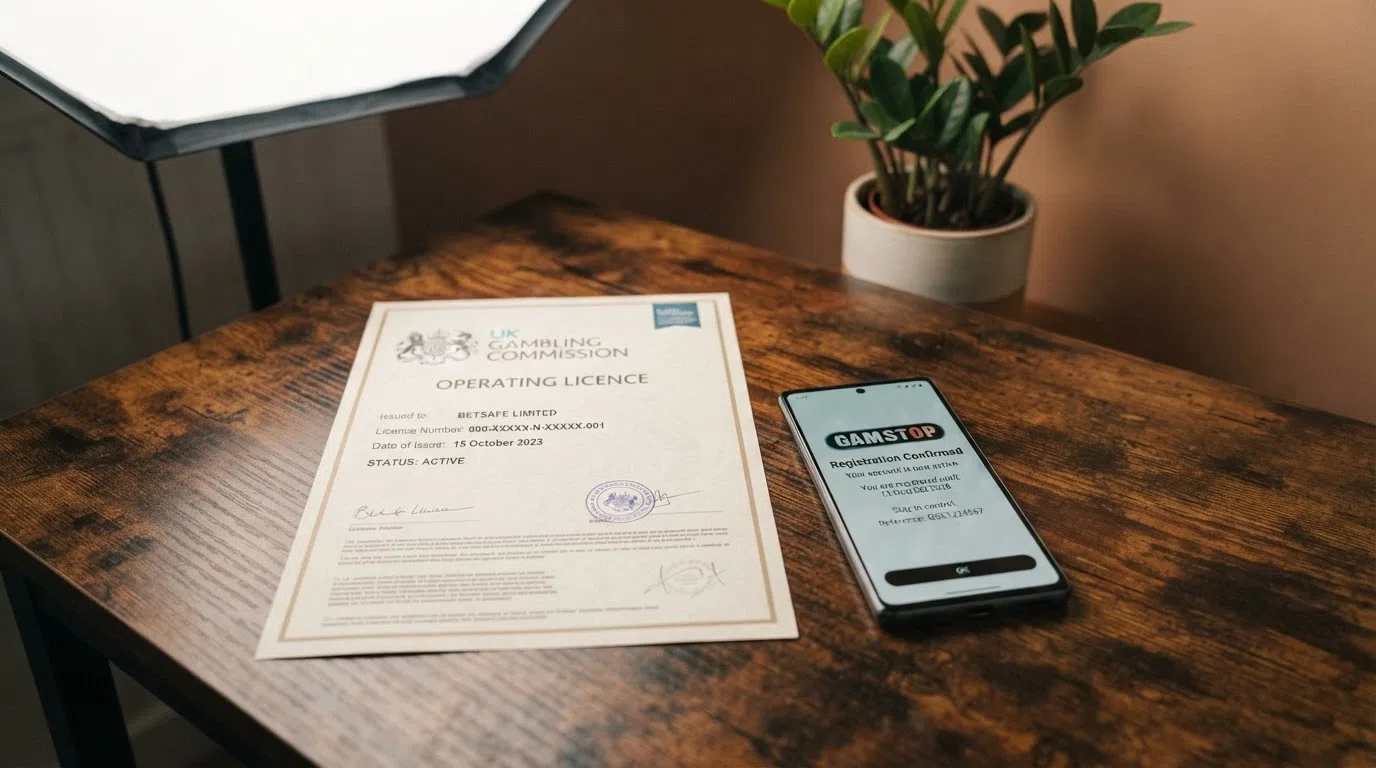
Every operator on this list holds an active UKGC licence. That fact is not decorative. The licence is the dividing line between a regulated phone-credit deposit — with mandatory age verification, deposit limits, GAMSTOP self-exclusion, ASA-bounded advertising, and a complaints route through IBAS or eCOGRA — and an unprotected one. An unlicensed operator is a section 33 criminal offence for the provider, and a player on an unlicensed site loses the entire safety net.
The UKGC Licence — What It Means and Why It Is Non-Negotiable
The Gambling Commission regulates commercial gambling in Great Britain under the Gambling Act 2005, extended to all remote operators serving UK customers by the Gambling (Licensing and Advertising) Act 2014. The point-of-consumption reform means a casino does not need to be based in the UK to require a UKGC licence; it needs to serve UK customers to require one. The three licensing objectives — preventing crime and disorder, ensuring fair and open gambling, and protecting children and vulnerable persons — shape every licence condition and code of practice that an operator follows.
A player can verify any operator’s licence status on the UKGC public register. The register lists the licence holder’s legal name, the trading name, the licence account number, the licence type, and the current status. An “active” status means the licence is in force; a “suspended” or “revoked” status means it is not. Every operator on this list holds an active licence at the time of writing, and the account numbers are listed in the operator write-ups above.
A GB licence is not the same as a Curacao or Malta Gaming Authority licence. A UK player at an MGA-licensed casino receives MGA dispute resolution, not UKGC. They are outside GAMSTOP, outside the ASA’s advertising rules, and outside the £150 financial vulnerability check. The protections this guide describes apply only at UKGC-licensed operators.
Age Checks, the Credit-Card Ban, and the Deposit-Limit Rules Coming in 2026
Three pillars of player protection shape the phone-credit deposit experience. Age and identity verification has been mandatory before any deposit or play since 7 May 2019 — no grace period, no deposit-first-verify-later model. The credit-card ban took effect on 14 April 2020 under LCCP licence condition 6.1.2 and extends to e-wallets funded by credit cards. The deposit-limit reform takes effect on 30 September 2026: from that date, only a gross deposit limit — based solely on money paid into the account — may be called a “deposit limit,” and decreases must be actioned immediately while increases carry a cooling-off period.
The deposit-limit reform matters specifically for phone-credit players because the £240 monthly carrier-billing cap sits underneath the player-set gross deposit limit. A player who sets a £100 monthly deposit limit at the casino will hit that ceiling before they hit the £240 phone-credit cap. The reform does not change the phone-credit ceiling; it adds a second ceiling underneath it, and the lower of the two binds.
The £150 rolling-30-day light-touch financial vulnerability check, in force from 28 February 2025, sits on top of these limits. It uses publicly available data, not a credit check, and applies to all GB-licensed operators regardless of deposit method. The check is not the same as the announced but not-yet-commenced affordability checks at higher deposit thresholds.
Advertising Rules, Dispute Resolution, and What the UKGC Does to Rogue Operators
Advertising for UKGC-licensed casinos is regulated by the Committee of Advertising Practice (CAP) and the Broadcast Committee of Advertising Practice (BCAP), enforced by the Advertising Standards Authority. From 1 October 2022, the test tightened to “strong appeal” to under-18s; no one under 25 may appear gambling in a UK gambling advertisement. The ASA’s enforcement powers cover the creatives and the media; the UKGC’s cover the operator.
Approved alternative dispute resolution providers — IBAS and eCOGRA — handle player complaints that cannot be resolved at the operator level. A player who escalates a complaint to the UKGC must first have exhausted the operator’s internal process and the ADR route. The Commission’s enforcement against rogue operators is disruption-based: between April 2024 and June 2025, the Commission issued 3,140 disruption notices and referred 447,778 URLs to search engines. The Commission does not currently hold statutory ISP or DNS blocking powers; legislation has been proposed but not enacted.
The ProgressPlay fine of £1,000,000 on 21 August 2025, for anti-money-laundering and social-responsibility failures affecting its white-label brands, is a recent example of the Commission’s enforcement teeth. Unlicensed provision is a criminal offence under section 33 of the Gambling Act 2005 — up to 51 weeks’ imprisonment, an unlimited fine, or both — but there is no known penalty for the player who gambles on an unlicensed site. What the player loses is protection.
Responsible Gambling When Your Casino Deposit Lands on Your Phone Bill
The phone-bill-shock problem is unique to carrier billing. A £40 deposit on a Tuesday becomes a phone-bill line item three weeks later, sitting alongside the monthly contract charge and the routine add-ons, where a bank transaction would have triggered a real-time alert and an app notification. The carrier-billing flow bypasses the spending-awareness layer that debit-card deposits carry by design.
Phone Bill Shock — the Risk That Is Unique to Carrier-Billing Casino Deposits
A gambling charge on a monthly phone bill is psychologically different from the same charge on a bank statement. The bank transaction arrives in real time, tagged with the merchant name, sitting in an app that the player opens regularly. The phone-bill charge arrives weeks later, embedded in a list of routine items, often with a generic “premium SMS” or carrier-billing descriptor that does not name the casino. The £240 monthly cap can accumulate into a £240 phone-bill surprise that the player did not track in real time.
The risk lands against a backdrop of record demand for treatment. GamCare made 996 referrals in January 2026 alone, up from 674 in January 2025 — a 48% increase year-on-year. NHS gambling referrals reached 4,355 in 2024/25, almost doubling from 2,284 the year before. The National Gambling Support Network treated 11,960 clients in 2024/25, an 11% rise. Carrier billing is not the cause of these numbers, but it is a deposit method that makes the spending harder to notice.
Deposit Limits, Reality Checks and Self-Exclusion — the Tools Every UK Player Has
Every GB-licensed operator must prompt a customer to set a financial limit before their first deposit, from 31 October 2025 onwards. Decreases are actioned immediately; increases carry a cooling-off period. Reality checks and session-loss displays are mandatory; time-out options are available. The full safer-gambling toolset sits underneath the phone-credit deposit flow.
GAMSTOP is the national self-exclusion register, mandatory for all GB-licensed online operators since 31 March 2020. A player can self-exclude for 6 months, 1 year, 5 years, or 5 years with auto-renewal. The exclusion cannot be cancelled early. GAMSTOP covers GB-licensed online sites only; it does not reach unlicensed operators, which is why the licence itself is the dividing line this guide keeps returning to.
The deposit-limit reform of 30 September 2026 reshapes the deposit-limit tool. From that date, only a gross deposit limit may be called a “deposit limit” — limits based on net deposits or on losses cannot use that label, even if they offer similar functionality. A player who sets a deposit limit at a UK casino after the reform date is setting a gross deposit limit, and the operator must action decreases immediately.
Where to Get Help — GamCare, the NHS and the National Gambling Support Network
The GamCare National Gambling Helpline is 0808 8020 133. The line is free, confidential, and available 24 hours a day. GamCare also runs the network of treatment and peer-support services that the 996 January 2026 referrals fed into.
The NHS operates gambling-harm clinics in England, Scotland and Wales. Referrals from the NHS gambling-clinic network reached 4,355 in 2024/25, almost double the 2,284 of the year before. The National Gambling Support Network — funded by GambleAware and delivered through regional partners — treated 11,960 clients in 2024/25.
NHS England estimates that almost 1.6 million adults in England may benefit from treatment or support for harmful gambling. The Adult Psychiatric Morbidity Survey puts moderate-risk gambling (PGSI 3+) at 1.6% of adults and problem gambling (PGSI 8+) at 0.4%. The population-level numbers are small. The treatment-level numbers are large. The gap is what the safer-gambling infrastructure is built to close.
How We Selected and Ranked the Phone-Credit Casinos on This List
The ten operators in this ranking were drawn from the UK Gambling Commission’s public register of active licensees. Phone-credit acceptance was verified against each operator’s published cashier and terms, not against marketing pages. Bonus eligibility for phone-credit deposits was checked against the promotional terms and conditions, paying attention to the “excluded deposit methods” clauses that name pay-by-mobile, Boku or Fonix directly.
The ranking reflects a qualitative balance of five factors: phone-credit acceptance and any stated bonus eligibility; the size and structure of the welcome offer; the wagering multiple and how it interacts with the UKGC’s 10× cap; the breadth of the game-provider library; and the standing of the UKGC licence. No percentage weight was assigned to any individual criterion, and the ordering is not a score. An operator that accepts phone credit but excludes it from the welcome offer ranks differently from one that accepts both; an operator with a small wager-free welcome ranks differently from one with a large matched bonus and 10× wagering.
Every operator listed holds an active UKGC licence at the time of writing. No operator was added or excluded on grounds unrelated to those five factors.
Phone Credit Casino Deposits — Convenient Today, but Know What You Are Signing Up For
Phone-credit deposits are the fastest way to fund a UK casino account from a mobile. The flow is frictionless: one number, one SMS confirmation, instant credit. The £30–£40 daily cap is a genuine spending brake that a debit card does not carry, and for a PAYG player it is the hardest ceiling in the deposit-method set. The friction arrives later.
The near-universal exclusion of phone-credit deposits from welcome bonuses means the best matched offers — 100% up to £1,000 at Duelz, up to £1,500 at Hot Streak, 25% up to £50 at Ivy Casino — require a Fonix or debit-card deposit that satisfies the bonus terms. A player who funds the welcome run entirely by phone credit at most UK casinos receives the balance but not the matched bonus. The deposit-only path forces a second payment method on the player at cashout time; no win returns to the phone bill. The 15% fee some casinos deduct erodes the playable balance before the first spin lands.
The player who benefits most from phone-credit deposits is the casual mobile-first depositor who values speed and a hard daily ceiling over bonus value, and who is content to register a debit card for withdrawals. The player who should use a debit card from the start is anyone chasing a matched welcome offer, anyone depositing more than £40 in a single session, or anyone who wants the winnings to return to the funding source they paid with. Both routes are legitimate. Neither is universally better. The choice is about which constraint matters more to the player sitting in front of the cashier.
Frequently Asked Questions
What is the maximum I can deposit with pay by mobile at UK casinos?
The per-transaction cap sits at £30–£40 depending on the network and provider, and the monthly ceiling is £240 per subscriber under the Payment Services Regulations 2017. The Phone-paid Services Authority adds a £40 per-day limit on top. A player who hits the monthly wall is locked out for the rest of the calendar month. The carrier-billing cap sits underneath any player-set deposit limit at the casino, so a £100 monthly deposit limit binds before the £240 phone-credit cap does.
Which UK mobile networks support casino pay-by-phone deposits?
EE, Vodafone, O2 and Three all support carrier-billing casino deposits through both Fonix and Boku. Tesco Mobile, Giffgaff and Sky Mobile route through the same platforms. Network support does not guarantee casino acceptance; a casino may accept Fonix at the cashier while excluding phone-credit deposits from bonus eligibility. The cashier at the specific casino is the final word on what the player can deposit and whether it qualifies for the welcome offer.
Are there any fees for depositing with phone credit at UK casinos?
Some casinos absorb the carrier-billing cost. Others deduct a 15% processing fee before the balance reaches the casino account, leaving £17 of playable credit on a £20 deposit. Space Wins charges a flat £2.50 per PayByMobile transaction. The fee is not always disclosed in the cashier before confirmation; it appears in the bonus terms, in the small print or in the FAQ. Players should check the cashier and the bonus terms before confirming the SMS code.
What is the difference between Boku, Fonix and Payforit for casino deposits?
Payforit was the original UK shared trust mark for charge-to-mobile payments and was retired in 2019. Fonix is the most-used carrier-billing platform at UK casinos today. Boku operates in more than 90 countries with around 28 million users globally and is the second major UK platform. The player experience is the same across both active providers: SMS confirmation, instant credit, deposit-only. The difference is the brand name on the SMS and the per-transaction fee structure, which varies by casino.
Can I set deposit limits when using pay by mobile at UK casinos?
Yes. Every GB-licensed operator must prompt a customer to set a financial limit before their first deposit, and the phone-credit deposit flows through the same limit-setting process as a debit-card deposit. Decreases are actioned immediately; increases carry a cooling-off period. From 30 September 2026, only a gross deposit limit — based on money paid into the account — may be called a “deposit limit.” The £240 monthly phone-credit cap sits underneath the player-set limit, so the lower of the two binds.
Which UK Mobile Networks Let You Deposit at a Casino?
The Big Four — EE, Vodafone, O2 and Three — all support carrier-billing casino deposits through both Fonix and Boku. The MVNO layer is well covered too: Tesco Mobile, Giffgaff and Sky Mobile all route through the same platforms. Network support is not the same as casino acceptance; a casino can accept Fonix on paper and still flag specific payment methods as bonus-excluded, or apply a higher minimum for phone-credit deposits than for debit cards.
Payments – Casinos That Accept Bitcoin UK
Content created by the «Casinos That Accept Bitcoin UK» team